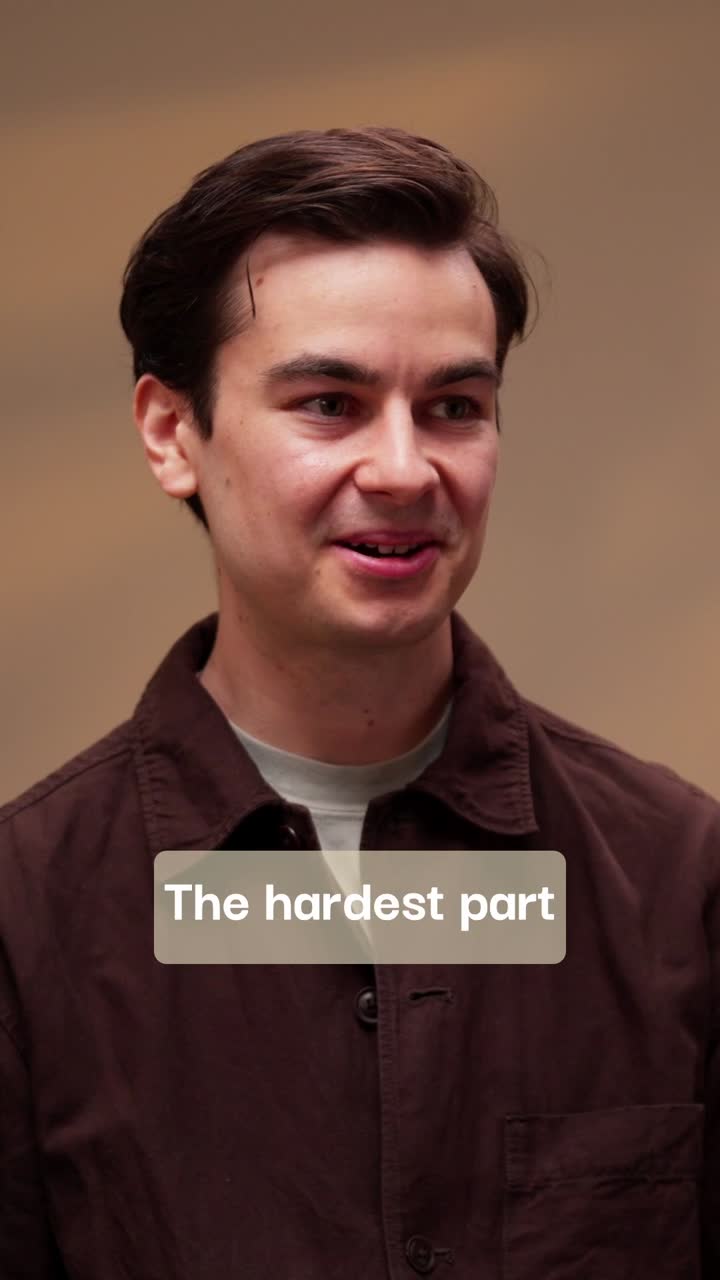
Who Is Sam Kececi?
Sam Kececi is a founder who left a $21 million company to build software you can leave to your children in your will. That framing sounds like marketing, but on closer look it's precise — the personal AI product his new company is building is legally structured so users own the model as a transferable asset. What sounds unusual is actually engineered.
Sam is the founder and CEO of The Sentience Company, a New York-based personal AI startup that launched publicly in March 2026 with a $6.5 million seed round led by Bain Capital Ventures. Before Sentience, he served as CTO of Macro (originally CoParse), where he built a contract-collaboration product from zero to seven-figure ARR and raised approximately $21 million. He studied computer science and economics at Columbia and worked as an ML engineer at Bridgewater, Amazon, and Salesforce before turning founder.
What makes Sam interesting isn't the resume — it's the reason he keeps building. He lost both grandparents a few years ago and realized that everything they knew lived in a handful of voicemails and his own fallible memory. The company he's building today is, at some level, a memorial rendered as engineering.
The Archetype: The Creator
The Creator
The Sage
Tests & Allies
Sam's primary archetype is The Creator. His secondary archetype is The Sage. Everything about how he builds — the public master plan, the seven phases, the willingness to publish "Phase 7: Unknown" as a labeled roadmap item — comes from someone whose default motion is to make new things and teach through frameworks.
You can hear it in how he talks about his own work. When asked what Sentience is, he doesn't start with a customer story. He starts with the vision, then the two-mode AI thesis (some tasks are median-fine, others require your specific voice), then the phase breakdown. Only after the framework does he reach for the story. That's Creator-Sage motion — build the model first, illustrate it with the case study.
"We want to create actual emulations of humans," Sam says. "The way that I write an email or the way that I talk to my team is different than a different founder. And they're gonna build a different business as a result."
The Hero Match
Daedalus
Daedalus was the mythological Greek master craftsman — the inventor who built the labyrinth for King Minos, designed the wings that carried him and his son Icarus, and crafted mechanical statues so lifelike Greek writers described them as "seeming alive." He worked at the edge of what anyone believed was possible. His story is about the pursuit of technical mastery, and the cost of that pursuit.
Sam maps to Daedalus on three specific counts. First, the master plan itself is Daedalus's blueprint — everything works only if every part works, and Sam has publicly named the part he's not sure will work. Second, the emotional engine of the company is a preservation impulse, which parallels the Icarus dimension of the myth — Daedalus built wings partly to preserve his son's life, and Sam is building Sentience partly to preserve wisdom he couldn't preserve for his grandparents. Third, Daedalus's mechanical statues, which spoke and moved and appeared to have inner life, are directly what Sam is trying to build twenty-five hundred years later. The technology has changed. The archetype hasn't.
Hiro Hamada — Big Hero 6 (2014, Disney)
For a modern hero match, Sam is Hiro Hamada. Young, brilliant inventor who builds an AI companion (Baymax) that preserves the essence of the older brother he lost. Hiro leads a team of builders. He's technically extraordinary but the emotional engine of his work is grief metabolized into invention rather than left raw.
"He built Baymax to carry the work his brother started" — that's Hiro. And it's also Sam, except the person he lost were his grandparents, and the AI he's building preserves not just memory but decision-making context. The map is close enough to be uncanny.
The Story Behind The Sentience Company
There's a jeweler in Newfoundland named Pat. He's sixty-seven years old and he runs a twenty-person high-end jewelry business. Every day, his employees consult a Sentience of Pat before sending outreach — "run it by my sentience first," Pat tells them, "make sure my sentience approves." He uses it to check decisions, review deals, brief his team. It replaces a lot of what a partner or a senior manager would do in a small business.
But Pat isn't using it for operational efficiency. He's using it for succession.
Pat is about to hand the business to his daughter. And what he told Sam is: "I actually have this building source of my knowledge now. If my daughter wants to ask — how do you think about a tough customer, how do you think about advertising — it will be able to pull from actual concrete examples."
His daughter isn't inheriting a customer list and a set of physical assets. She's inheriting the taste her father developed over forty years. That's a new category of thing to inherit.
The reason it exists is Sam's grandparents.
Sam's grandmother ran a dance studio. His grandfather started a real estate appraisal business. When they died, everything they knew — every hard lesson, every instinct for how to handle a difficult customer, every argument they'd have about pricing or hiring — disappeared into a few voicemails, some text messages, and Sam's own memory. "The content of them that lives in my brain is pretty fallible," he says. It's a striking thing for a founder to admit on camera.
That grief became the fuel to walk away from a $21 million company and start a new one.
The Founder's Journey ↔ The Company's Journey
ML engineer at Bridgewater, Amazon, Salesforce → cofounded and became CTO of Macro (formerly CoParse), raised $21M, built to 7-figure ARR → left in August 2025 → started The Sentience Company → emerged from stealth March 2026 with a $6.5M Bain-led seed → now testing the product with early prosumer users while running an eight-person team in Williamsburg.
Stealth build → public launch as personal AI positioned against generic frontier LLMs → early adopters in the founder/executive/small-business-owner mold → seven-phase master plan published as public roadmap → Phase 7 acknowledged as unknown → team scaling toward a "billion-user personal AI" ambition.
Both stories are structured by the same Creator archetype: build the framework, ship the phases you can, honestly label the phases you can't. The company IS the founder's philosophy made tangible.
How Sam Leads
Sam owns his decisions. When he narrates past choices — the Macro walk-away, the master plan structure, the hiring philosophy — it's always "I decided" or "I chose," never diffuse or collective. He credits his team by name when execution comes up (Teddy Schoenfeld as chief of staff, his founding engineer Jules), but strategic decisions rest with him. That's healthy at nine months in — strong founder voice with named partners for execution.
He's allergic to bureaucracy. He runs a flat team of eight. He skips LeetCode interviews entirely and hires by working directly with candidates for real projects. He tells his team that Sentience is being built "first and foremost for me" — because if the product works for him as the strongest power user, it can work for anyone.
Founder Superpowers
Translating personal pain into universal product
The Macro pain — being a "glorified information router" and a "toll booth in the loop" as CTO of a scaling startup — became Sentience's core wedge (personal AI for high-context operators). His grandparents passing became the legal-asset architecture (software you can transfer or bequeath). Most founders extract a single insight from a single pain. Sam does it systematically. Felt experience becomes shipped feature.
Architecting frameworks from neuroscience
The master plan maps perception, memory, retrieval, executive function, motivation, emotion, and metacognition as actual product phases with defined inputs and outputs. Most AI founders reach for the brain as a marketing metaphor. Sam uses it as system architecture. When he describes Phase 2, he means a specific knowledge-graph-plus-nightly-synthesis system, not a vibe.
Distilling complexity into simple plans
Sam publicly cites Elon Musk's Tesla Master Plan and Richard Feynman as influences on how he structures Sentience. The master plan page is written so a middle-schooler could follow it. Phase 7 is honestly labeled "unknown." That kind of clarity, especially about uncertainty, is unusually mature for a nine-month-old company. Bain led the seed for reasons; this is probably one of them.
What It's Like to Work with Sam
Sam is high-involvement without being loud. He builds energy through an answer rather than starting at peak. He's comfortable being interrupted (he took a phone call mid-interview without disruption), which reads as security, not casualness. He picks up threads other people leave — when I mentioned my own digital twin experience, he finished the sentence I was building.
He's demanding but not autocratic. He credits his team by name. He hires by working directly with people rather than through coding assessments. He meditates ten minutes a day, which is an autotelic person's habit — the value is in the sit, not the outcome. He runs Sentience's own product for himself first, and would rather ship something excellent for one user (him) than something mediocre for many.
"There's some amount of, I guess, healthy narcissism in there," Sam says about building the product for himself first.
The team he's built reflects him — small, flat, allergic to bureaucracy, technically deep, emotionally serious. If you're the kind of engineer who wants to work on a per-user AI model at a company that publicly labels its uncertain phase "unknown," Sentience is probably the closest match to your temperament on the market right now.
Why This Matters (For You)
If You're a Founder Building a Personal AI or Adjacent Product
Sam's approach to positioning is worth studying carefully. He didn't launch by claiming Sentience beats ChatGPT — he framed the market as bimodal, with frontier LLMs winning some categories (coding, data analysis) and personal AI winning others (voice, judgment, personal context). That framing turns competitors into complements. He also structured his company as an asset-ownership play, not just a subscription — which sidesteps the usual SaaS lock-in critique and opens genuine legacy planning as a use case. If you're building anything adjacent, the question worth asking is: what's the ownership structure that makes your product genuinely differentiated?
If You're an Engineer Building Personal AI Infrastructure
The technical approach at Sentience is a three-layer architecture: capture (email, calendar, Slack, notes, meeting audio), synthesis (a knowledge graph updated nightly through what Sam calls the "sleep phase"), and action (permission-gated tool calling for email, calendar, messaging, notes). They use per-user LoRa fine-tuning on top of open-source base models — not just prompt engineering. The insight worth stealing: personalization isn't about model architecture, it's about data fidelity plus active capture. If you're building agent memory or personal context infrastructure, the "active capture + nightly synthesis" pattern is a design pattern worth borrowing.
If You're Early in Your Career
Sam's path is a case study in doing rigorous engineering work first (Amazon, Bridgewater, Salesforce, then Macro as CTO) before founding the company he actually wanted to build. He didn't skip the technical apprenticeship. He built serious systems for other people first, then knew exactly what he was doing when he started his own company. If you're early in your career and impatient to found a company, Sam's arc is a reminder that the "founding chops" you're trying to acquire are actually earned through years of shipping real systems that break in real ways.
If You're Considering Joining The Sentience Company
Sentience is hiring across four roles as of mid-2026: AI/ML researchers focused on personalized models, full-stack engineers building the product, a growth lead, and a product designer. The interview process skips LeetCode in favor of hands-on working sessions with the team. Sam hires for EQ plus IQ — technical baseline is table stakes, judgment and collaboration under uncertainty are the actual filter. The team is eight people in Williamsburg, growing fast, allergic to hierarchy, and building at the edge of what's possible in personal AI. If that's your temperament, apply.
Join The Sentience Company
Now that you know how Sam Kececi leads, see if there's a role for you.