Managing Machines vs. Managing Humans. What's The Difference?
About this episode
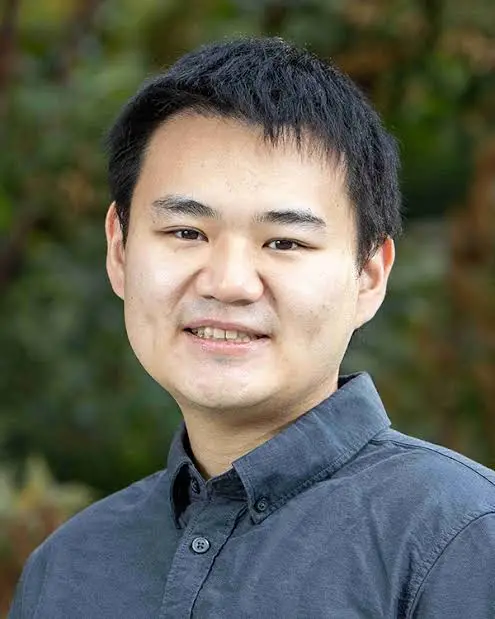
Simon Shaolei Du proved the math behind why deep learning works — the first global convergence result for gradient descent on deep networks — then left the whiteboard to run 100 AI agents at once. His claim: a large model is less random than a person, so 100 agents are easier to manage than 100 people. At Apodex he builds a deep-research "solver" where a separate agent's only job is to distrust the others — checking sources, reasoning, and code before any answer ships. Here's how a multi-agent team beats a bigger model, why a 10-million-token problem doesn't need a giant model, and what he tells CS grads who can't find a job.
Key moments
- 0:00 100 AI agents vs. 100 people (cold open)
- 1:24 Meet Simon Du, one of ML's most decorated young scientists
- 2:37 Why build an AI "solver" instead of a chatbot?
- 4:14 What problem is Apodex really solving?
- 6:49 How does an AI break a hard problem into pieces?
- 9:19 Why is search still hard for AI agents?
- 12:46 The agent team — and the agent that distrusts the rest
- 17:13 Why a 10-million-token problem doesn't need a giant model
- 19:02 Won't 100 AI agents just compound errors?
- 25:55 Can an AI actually predict the future?
- 28:31 Predicting a World Cup match, live
- 33:31 Build your own AI agents, or buy?
- 36:25 Breaking into AI and surviving the job market
- 42:36 What's next for the "heavy-duty solver"?
- 44:02 One habit for a better founder (and a book pick)