How Fast AI Learned Math
About this episode
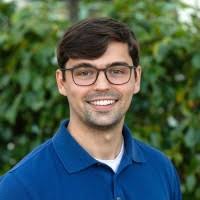
A UC Berkeley professor watched AI solve a problem he'd thought about for two years — then close a Millennium Prize problem weeks later. Phillip Kerger, former NASA quantum researcher and optimization complexity theorist, gives the calibrated, no-hype version: what AI genuinely did to mathematics, why "quantum AI is pretty much dead," and what he now tells students when the machine can do the homework.
Key moments
- 00:00 Who is Phillip Kerger and what does he research?
- 02:20 Did AI just solve a Millennium Prize problem?
- 04:50 What is Navier-Stokes in plain English?
- 08:51 How did AI solve what humans couldn't?
- 11:20 Is it new math, or a needle in a haystack?
- 14:29 What's left for human mathematicians?
- 17:19 Where does AI stop and human taste begin?
- 22:38 Why does every AI dashboard look the same?
- 37:03 Why quantum AI is "pretty much dead
- 45:00 Where is quantum genuinely useful?
- 47:38 The 1.1-second tablet vs the quantum computer
- 50:47 Why homework isn't graded on correctness anymore
- 53:27 The open-ChatGPT exam that averaged 99%
- 59:10 What is the AI learning paradox?