The 5 Tailwinds Every AI Builder Should Ride
About this episode
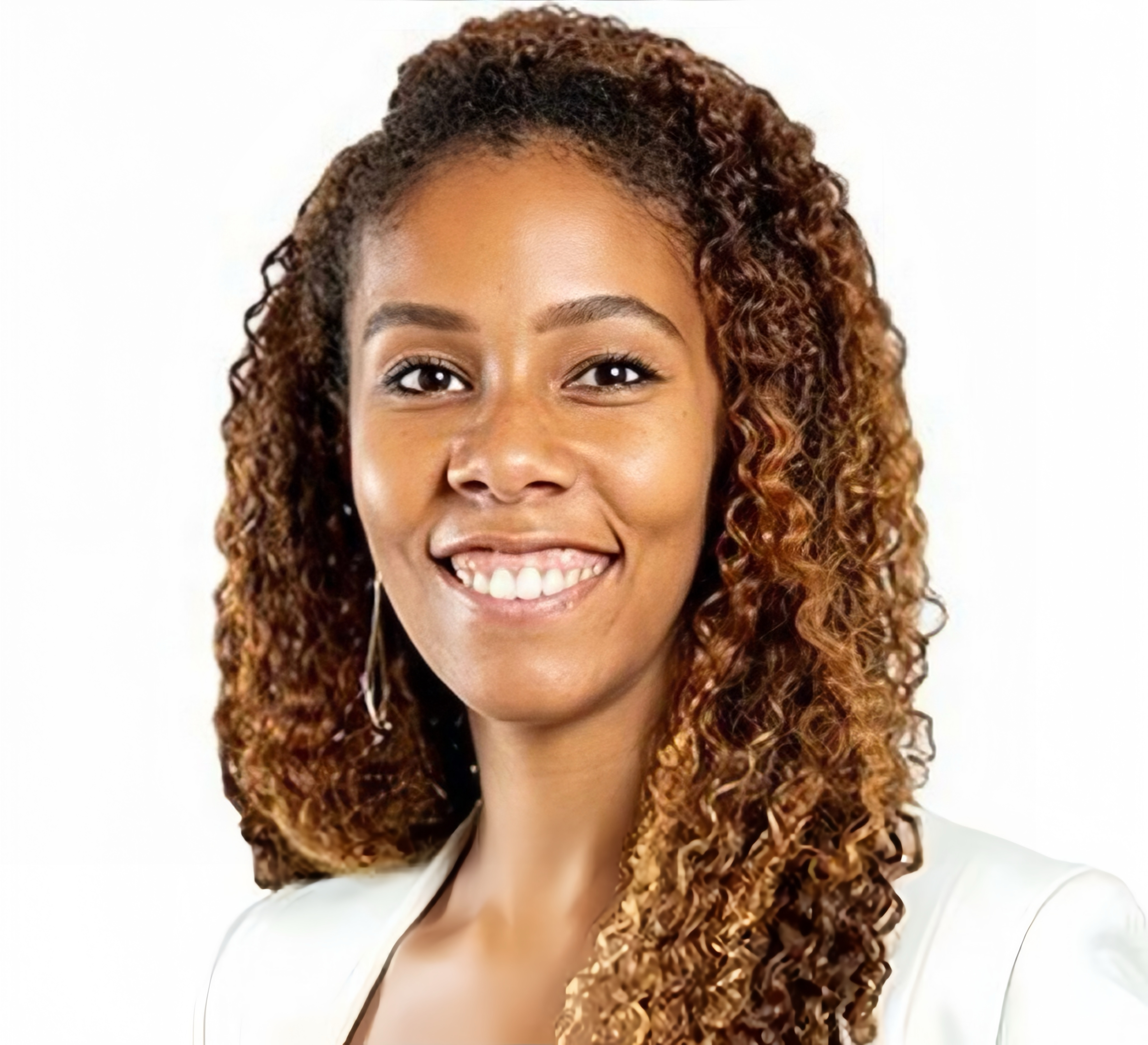
AI investment hit $200 billion last year. OpenAI just closed $110 billion — the largest private round in history. Mercedes Bent has seven specific reasons the AI bubble could pop. She also just bet her career on it. After scaling General Assembly from $2M to $100M and investing $1.75B at Goldman Sachs, she left a partner seat at Lightspeed to co-found Premise Ventures — going all-in on consumer AI while 94% of VC funding chases enterprise. Here's her 7-point founder filter, the behavioral shifts builders are missing, and why she thinks the crowd has it backwards.
Key moments
- 00:00 We're so dumb for starting a VC firm as two women
- 00:51 Why does YC tell founders to avoid consumer?
- 01:39 Is consumer AI actually harder than B2B?
- 04:36 Is consumer less competitive than enterprise?
- 06:28 Will ChatGPT just kill every consumer startup?
- 08:27 Why is voice the biggest behavior shift in 2026?
- 09:31 How do builders find "new land" to build on?
- 10:24 How did homeownership reshape a generation's risk appetite?
- 13:06 Where are spending and savings trending now?
- 13:45 What are the 5 sources of startup tailwinds?
- 17:20 What does a VC actually look for beyond the pitch deck?
- 18:28 The 7-point founder framework that filters 99%
- 21:47 Why founders need to be Olympians, not just athletes
- 23:17 Inside the Sci-Fi Tech Club: training your brain for the future
- 24:59 When founders fall in love with the solution instead of the problem
- 26:28 Why "just go talk to customers" is still the most ignored advice
- 28:16 Building an agentic VC firm with two people
- 30:21 When VCs compete for founders instead of the other way around
- 33:56 Rapid fire: myths founders believe about VCs
- 37:25 The real data on female founders and funding
- 41:23 Why is every AI product a chatbot?
- 43:46 What new AI interfaces could actually look like
- 47:35 Is the AI bubble about to pop?
Full transcript
Like me and my co-founder, we're both women. We're so dumb for starting a VC firm as two women. We really need a guy in here. The market is not friendly to all female teams. It'll go totally heads down. Show up and be like twice as good all the time. Yes, 2% of the CEOs of VC-backed companies are women. It's pretty abysmal. If you are a woman founder CEO, the odds are already stacked against you. YC's latest batch is like over 80% enterprise. I love investing in consumer because I think it's so hard. It's like the Olympics every day. The model I always go after is founder first. Somebody who's urgently dissatisfied, who is a resource magnet, is a learning animal. I have like seven reasons that I think the AI bubble could get popped.
Mercedes, welcome.
Thanks for having me.
I want to confess I was a I was an aspiring founder to be three years ago. And I did probably most of the found new founders would do. I watched every single YC video on YouTube. And I remember clearly one of the key takeaway was do B2B and do the boring business and don't try consumer. And Dalton and Michael Seibel even called consumer ideas like tar pit ideas. I don't know if you watched that episode, but YC's latest batch is like over 80% enterprise. I think historically they've been like that, right? What would you say to founders like me who internalize that advice so much?
Yeah. I don't think they're entirely wrong if what the goal is to get the highest percentage of companies to the next stage. It's easier to get to the next stage as a B2B company. I think from seed to series A, I think that's just categorically true because at the B2B stage, at as a B2B company, you just have to identify needs that your customer wants, create a solution that sells it, get a pilot going, get some type of ARR, and then you're off to the races. You probably have a product that's good enough to warrant, you know, getting to like 1 to 5 million ARR. Tons of B2B companies get there. Now, B2B does get very difficult the more you scale. If you get to hundreds of millions and billions in revenue, there's a lot that you need to build out from enterprise-grade security to make it to that. But it's hard for all companies. The problem with consumer is that you don't know exactly who's going to what's going to work for that first phase. If you're going to be able to get product market fit, it's almost a bit magical.
There are some people who are really good at distribution and they'll be able to get users but they and they'll be able to scale but they won't be able to get the retention. In B2B, your time frame to tell whether or not you have good retention is almost a year. Like you sign a pilot and then you have a whole year to figure it out. In consumerland, you get a customer and you have one day or less. You have minutes to show them the value of the product or they're never coming back. And so when I think about how much you could iterate over and over again to get towards a better product, you have just so much more time to do it in B2B that it makes the early part of starting a business, I think, a lot lot easier in B2B than in consumer. My firm, we invest. We're generalist. We do everything from research models to B2B dev tools to app layer to everything fintech as well. And I love investing in consumer because I think it's so hard. It's like the Olympics every day to just get a basic product off the ground that customers want to return to the next day.
And so there's a lot of other things I of but I think like that YC advice is true. I actually don't invest in consumer products pre-launch because the cliff of whether or not a customer is going to like it is such a big difference from I okay there's some user base. I'm perfectly happy to invest in consumer products that have a couple thousand, tens of thousands of users, but man, when you haven't launched yet and you have no idea if you're going to even get a thousand customers, that is a hard space to be investing in.
I just thought it's less competitive with B2B because less people have access to that population of users. You have to
I somewhat disagree. I think that it depends what you're looking at, but if you're looking at Silicon Valley venture-backed startups, the vast majority of companies that are funded by VCs are enterprise and B2B companies. So, you have a lot more competition from VC-backed companies. You something like 70 or 80 or I think it might even be as high as 90% depending on the month or the year cuz I saw a report that said only 6% of VC funding went to consumer startups in 2024. And so if you think about what that means, it's a lot more competitive on the B2B side from a venture-backed standpoint. Now that said, I think if you look at the a number of small businesses that are started every year in total in America, we have something like 33 million small businesses at any given time. I think more of those companies it's closer to a 50/50 or 60/40 split from enterprise to consumer but definitely in the venture-backed landscape it's very skewed towards enterprise really depends what lens you're taking to it.
You could also say from the lens of okay well in B2B land you're selling to lots of different types of customers to your point you know you're selling to a manufacturing B2B you're selling to robotics you're selling to a CFO you're selling all sorts of different sectors and professions whereas in consumer you're always selling to consumers but there's billions of consumers and you can build a very big product without reaching billions of customers you can still build a consumer product with hundreds of millions, but you do have to get pretty big to have the scale to go public.
For the consumer products, do you think there's some, you know, platform risk with ChatGPT just do all the consumer stuff in its chat interface and just easily kill you today?
That's like the classic question. I think I mean the answer is no. Of course, there's like Google tried to get into everything. They tried to do home services. They tried to do travel. They tried to do shopping. They tried to do social. At the end of the day, Google today is primarily a work productivity product and search product. Search and ads being, you know, their biggest lines of business. And so, I think there's a lot of verticals and slices you can start your business in and still not be duking it out with like the big giants.
But that said, like it's always the classic building blocks of consumer are true. You have to find a customer who wants to rip the product out of your hands and then retains and sees value to continuing to pay for years and years on end. And so the most classic business models that always work are networks market which are sometimes also marketplaces platforms things like Roblox and Unity and Steam or even or systems of record you know collaborative workspaces where people are storing all of their data like ERPs that start to become really difficult to rip out.
So I think that's always true is the best defensibility comes through business model design and having a really clever hook and a retention mechanism. But yeah, it's it's a it's like that's the that's the question I've heard tons of times about OpenAI is going to eat everything and I just don't think they are going to prioritize more than one to two things at a time. They're a research lab first and foremost and research labs want to do research. They actually don't want don't do tons of product extension features, especially anything that touches the real world very well at all.
And are you seeing any like consumer behavior changes happening right now in 2026 that you think the builder community, which is my audience, should be watching?
I think voice is one of the and how consumers are using voice is one of the biggest behaviors that's changing in digital platforms today. Historically in a lot of other countries not in the US as much voice was used pretty frequently for WhatsApp communication and different things like that but pre and previously in the US like it's mostly a text-based economy. And the thing that I love about why voice is working now is that finally we have all of this unstructured conversation and data that AI can actually consume, digest and structure very easily. So they're turning a lot of spoken word into legible structured data sets. And I think that's why you see a lot of products that are taking off new categories that have a ton of usage do have voice at the core of their product. There's this great kind of analogy that Alex Zhu who's the co-founder of Musical.ly says is that when you build a new digital product, you have to build on top of new land.
New land being a new space that a new a digital space or platform that has doesn't have a lot of usage yet and that people don't know how to optimize and I think that new land space has been voice when you see all the notetaker companies that are really ranking quite highly in terms of their usage when you think about all of the voice dictation companies that are allowing you to do voice to text and if you look at even just the bigger AI assistant and chat bots, the ChatGPTs and Claudes of the world, what percentage of their input is with voice. I think it's just such a huge opportunity. So that's where I see one really big behavior changing. I think the other behavior that's been changing a lot has been happening for a while, but it's sort of I think they call it the degenification of the younger generations's approach towards finances and money which Robinhood was early in exploring and cultivating this in a way and basically it all stems back to the affordability of home ownership. There's been some really good papers written about how everything is downstream of that.
When the millennial generation realized that we were going to run out of social security, that the great financial crisis happened, mortgage default swaps, everybody's home was underwater, that purchasing a home was no longer the fastest path to earning and building wealth. That you actually had to invest your biggest nest egg in other assets. That made the mindset shift much more I will lean into riskier assets in order to achieve the level of wealth that I believe is promised to me by the American dream. And so you take that forward, that's been happening for 15 years. And then you have 2021 when GameStop, AMC, like that whole saga happened. And you also had Web3 and crypto economy. And I just see this continuing to grow and grow and grow as a as a mindset that the younger generations approach. The percentage of homeowners that of million-dollar salary earners who are renting instead of owning their home has increased exponentially in the last few years. And I think that's just a sign that people are not wanting to sign up for that bargain, that deal anymore.
So that's those are two consumer behavior changes that I think really underpin a lot of digital products today from the wealth standpoint and from the user interface standpoint. I was going to say for the finance tools, I think we're seeing it already too, but anything that allows a consumer or a user to diversify their wealth building away from traditional cash, stock or home and mostly cash or home is an example of that. So everything people are doing with stablecoins, with crypto and staking, with alternatives, there's been a really big increase in the number of people who are investing into like owning private equity as one of their sources of diversified wealth. So I think all of that plus just it changes how people think about spending and saving as well.
What do you think the spending and savings, you know, are trending towards? I get a sense that people don't want to spend, but I could be totally wrong. I don't know.
This is very broad question, but yeah, I think like spending is actually you we are at like a all-time high on people defaulting on their automobile loans and also on credit card delinquencies. And so, nobody exactly knows why that why we're at such a big height and the economy can sustain it. But I do think that you're seeing I agree with you people are pulling back on spending instead of paying for some of the debt obligations that they have.
I think the hard part is finding a space though you know the you're saying the voice let's say voice is a new space but why like how do you think of that you know this is this is a unchartered territory and all of a sudden with this technology and a behavioral change you can create this land new land. I think that's the hard part. How do you how do those founders come up with those come up with the idea the new land? Yeah. The new land.
New land. Well, a lot of times you look for like where are the biggest shifts in terms of you know if you if you think about tailwinds sometimes they're called currents. It's a movement that is pervasive and large throughout an entire population or economy. Sometimes the tailwinds are technological like looking at ChatGPT, OpenAI, Claude, Anthropic, Gemini, everybody, all of the tools that were released basically in late 2022. We're going into year 3 to four of those tools existing. That's obviously a huge change that happened recently. You need to build on top of a recent tailwind. It has to be something that couldn't have been done in the last, you know, 5 years. If it could have been done 15 years ago, the question is like, well, why is a startup not already existed in that space? So sometimes there are technological twins, tailwinds. The other sources can be regulatory.
If the government changes a rule on something and suddenly that creates new opportunity, for example, the government recently changed on rules about how much you can what age you can retire at. Okay, then that makes a difference on what type of wealth products need or other living products that are needed for senior citizens. So technological regulatory sometimes it's cultural kind of like sentiment and taste oriented people start believing something for example the broader acceptance of samesex marriage like that was something that 25 years ago 30 years ago was not super widely accepted in the US and now it is and so those are things that you can kind of build on the back of but you have to look for it sometimes they're geographical trends and tailwinds sometimes They're macro and they're related to like COVID for example when everybody was in a pandemic.
There were huge tailwinds around digital products or work remote from home. So my biggest like advice to builders around there in terms of how to find new land is to identify a tailwind or a current through one of those five or six or sources of different tailwinds that I discussed and think about how does your problem area that you're super passionate about line up to one of those areas because when a tailwind happens it creates new land and of course like if we had a new platform shift I think everyone's waiting for the next iPhone or something like that to emerge. Maybe it's going to be whatever OpenAI and Jony Ive are cooking up without that pen, then that will obviously be a new platform that will enable a lot of new people to build new land on as well
Right? Yeah. Yeah. It's hard to it's hard to imagine what's going to be, you know, not in market yet, but it's going to be possible with all these technologies.
Yeah. And I think that your job as a builder is to get really close to the customer and start to and make sure you fully understand their pain points, but also their latent problems that they don't yet understand. And then pair that up with what you want to build, what you're passionate about, as well as where there's actual opportunity in the broader market from a tailwind perspective.
I want to for a moment put on a investor hat. If I want to evaluate an a let's say one AI startup as an investor and here here's what how I think I should do it. Let's say I get a business plan. I will look at a team's pedigree and I'll check if they're using the latest model and I will check their demo to see if it look impressive and I will check if they have a slide that says the total addressable market is a billion dollars and if the four checks I'll I'll think you know I'll go forward.
Yeah, we look at a lot more than that and that's a good start. But you will find almost every single company will fit that criteria.
No filtering. So, no filtering. Okay.
We need we need more filtering. These are always good. If we have an example, I'm like happy to go and like talk about
Show me the example.
Yeah. Yeah. Let me know if you have one. Like I'm always happy to talk about a real, you know, if there's a company we want to like analyze together. But basically the model I always go after is founder first. You have to be very convicted of their exceptional quality. I have a seven-point framework of the characteristics I like to look for in founders and other teams have their version of it. But mine is somebody who's urgently dissatisfied, who is a resource magnet, is a learning animal, has deep sector expertise, is a influential communicator who's relentlessly resourceful, and I forget what the seventh one is right now, but they're essentially like I can go really deep into each of those explanations. A decisive strategic execution machine is the last thing I look for.
And I have a lot of vocabulary that I use to describe exactly what each of those seven things mean. And the at a high level, you would say, yeah, a lot of people are those things. But the skill set of an investor is being able to separate what the top 0.01% look like in each of those categories versus the top 10% or the top 25%. Cuz I meet tons of people all the time who are impressive, but being generally impressive is not enough. They need to be exceptionally great. And as an investor, a lot of your training is getting exposure to what separates the 0.01 from the top 10%. That's what I spent six years doing at Lightspeed was getting lots of reps of exposure to that.
So that's like the very first thing I look at. Next for me is product. Like same thing as you said like I look at the product for me it's does this product feel magical on first use was there a very clear value prop that had a clear ability to pull people emotionally either with the value prop of utility or of entertainment. Did it have a retention mechanism that keeps the user there coming back day over day, week over week, what month over month depending on the use case of the product and of course like how did they build it? What and it's so hard to like describe this in abstract but yeah I look at product as a second and third I look at market fourth I look at the deal construct is this a viable deal where I'm actually going to make money. Market doesn't always have to be super large to start with. It needs to be rapidly growing and changing. And so the point we were talking about with tailwinds, I for example, when Uber first got started, the market size of black cars was tiny. Like if you had done that test you just said, it may or may not have hit the mark.
But obviously a behavior change was happening due to a tailwind of mobile technology being available and a cheaper, faster, better people wanting to be able to get to and from places without having to rely on calling up taxi. That's friction. It adds length and time to the process. So those are like a couple like those are maybe the four broad categories I look at. But there's also things like what is the vision of the team? What does this become? Is this a product that they can paint me a really clear vision in 10 years? How this changes the world and they can paint me the path from today to there, how they get there. There's a lot of very specific elements, but it's it's so much easier if we actually talk about like a real company to kind of like go through some of this.
One of the things that you mentioned about this Venn diagram of a lot of components adding together and you're looking for that center point that over overlapped with all these components the 0.1% you're really looking for an old you're not looking for just an athlete right somebody who can do all of those things is hard and one of the hardest thing I think is the vision part because how would how would know the founder how would they know like things will change along the way to this market today.
Well, this is where them being an influential communicator really comes into play as one of their key skill sets because they might not know exactly what the world's going to look like in 15 years, but they can have a hypothesis and be they should be able to infect the listener on the other side of the table from them with their energy and passion and enthusiasm that vision is a possibility. Like very early on they were saying things like in the future everyone will step out of their door and into a stranger's car to get around the city as their primary method of moving. And at the time that sounded absolutely crazy and today it's virtually true in big cities. And you know people things like people won't even own cars was another big statement that they made. So it all comes down to like how believable and credible do you find the founders's vision because it is a bet on the future.
I actually spend a lot of time trying to think about the future and I run this sci-fi tech club on the side for example where every month we read our favorite like some of my favorite science fiction books or movies and in part I do that because I always want a portion of my brain to be living in the future so that when a founder comes and tells me about this vision they have I can see some parallel somewhere to one of the many many dreams I've read or had about the future. And I think that's important. VCs should not be the people creating the future. You have to be very careful to stay on your side and not get too excited about what you think the founder is saying, but listen intently. But we do have to recognize when other people, the founders, are actually telling us about a vision of the future that is very credibly likely to come true.
So that sounds like an exercise you're doing like practice your brain for imagination
Constantly. Constantly. Yeah. I never thought about it that way, but you're right. I guess it's like the same way you need to do mental health exercises to stay fit mentally. You need to do physical exercises to stay fit, you know, physically. I don't know what you would call this one, but yeah, I need to do futurist exercises to stay pliable in my mind.
This is so interesting. I didn't know that VC is actually, you know, exercise in that imaginary world because they're tech. A lot of the technical founders, if you notice, I feel the researchers are very grounded towards the technology. It's hard to combine that with a use case in the future sometimes.
Yes. And that's a classic problem people get tripped up on is when they get more enamored with the solution than the problem. When you have that, you end up getting virtual reality, which I worked in the VR field a decade ago and it's still not a good technology 10 years later today. But everyone has in their mind that VR it's going to be so cool. I mean, we have this ability to do six degrees of freedom and to have, you know, like the mixed reality space and 180, you know, view field of vision.
Like it's optically incredible what they've been able to achieve and yet no consumer wants it cuz it's not solving any problem for them. If anything it creates more problems for them. It makes them isolated during times when they want to be social and for some small portion of the users it makes them actually physically dizzy and sick. And so yeah, that is a classic thing that I think when I look for and it depends on the founder, but when I meet researchers, that's one of the first things I'm analyzing in them is this a researcher who understands the customer voice, who seeks it out, who understands product value propositions, how to do hypothesis-driven experimentation around a ICP, like an ideal customer profile, not just around the technology because I'm sure they could do it on that side, right? There's a lot of things that we have to bridge and to I it feels like so much common sense sometimes. It's a little hard for me to understand when people don't are not like understanding no one's going to buy that product.
But it's not so common sense. Believe me, I talk with a lot of technical founders and almost 90% told me that the hardest part is go to market for them. They have no idea and they don't want to do sales.
Yeah. I love go to market. I think it's actually one of the more straightforward parts and this is where I understand where they're coming from. Of course, my dad's an engineer. He taught me coding when I was in high school. I, you know, originally started out going to college as a computer science grad. So, I get it. I get where they're coming from. But at the same time, it's like just go talk to the customers.
Just go. Just what the heck? Just go.
Just go. It's really Yeah, just talk to the customers. I had a event the other week that I hosted at Stanford with the head of product at Anthropic and with the CEO of Luma AI and the chief product officer of LinkedIn. Like amazing speakers that were discussing with a bunch of us engineers and researchers about what they're building and it was like the future of product management was the topic and they were saying how like well today we want like our product people can now do so much more but we still can't exactly get all of the engineers to talk to the customer even though like now that AI is writing a lot of the code on their behalf the engineers should have more free time to go do some of the producty type of stuff and it's like they did they want to I don't know.
Tell me what are you betting on for 2026? Like what kind of project would you invest in?
So there's a lot of things ways I could take that. I mean I'm betting on building an agentic VC firm in 2026. I just started a new VC firm and it's I feel so lucky to be building this year and not like 2 years ago because last fall finally agents really work thanks to a lot of the work that came out of Anthropic and with Opus 4.6 And so, yeah, we're building a whole bunch of products. We have about five externally facing, founder-facing products that we're building right now. We're automating everything from an internal tooling perspective with agents. Everything from like how I mean the classic stuff, how you reach out to founders, but even I run a couple of communities. I run in addition to Sci-Fi Tech Club, I also run a community called Surreal, which is a bunch of engineers and researchers and PMs and designers in the AI world. And I automate everything about running that community. I'm building instead of a member directory right now, we're building a member agent where it's a WhatsApp group.
We have a couple hundred engineers in there and people do their introductions and it's just kind of a free-flowing chat. And then I have an agent who turns that into a crawlable member directory. If you come in and you want to say, "Well, who else is in this chat that knows something about robotics?" It gives you a list of all of the profiles and even like a score ranking. And like we made that in 24 hours, you know, and like the first MVP. So I think it's that's one of the big bets that I'm placing this year is that in the future they always talk about the one person billion dollar valuation startup that's going to come about. What about the 10 billion two person VC firm of the future? Yeah. And I don't know about two people. Maybe we'll have like four or five. But like I don't think we need to hire a ton of staff and we can do a ton by ourselves.
Wow. They're crazy. I wanted to ask, do you actually think that's possible? And what do you think the human the humans value now with those kind of organizations you build?
I do think investing is inherently a people-based role. Of course, I as an investor am biased to say this and a lot of people say no, just find the like but this is people have been saying this alternative argument for a decade or more where they say well we have all these data sources. You'll just be able to identify what are the fast growing companies and then you'll just offer them a term sheet and money and they'll take it. Except for the problem is the best companies have way too much capital coming their way. And what wins is a relationship not an offer of money. It's a person that they want to work with. At the end of the day, when cap when you get to the point where all companies are great, capital becomes a commodity and the differentiation is that person who's going to be on your board, who's going to be on your cap table asking you questions, hopefully not too many, not annoying you as you try to build.
And I really fund fundamentally think at the growth stage where you could identify companies just based off of data that relationships still win because of the ability to actually win over the founder when they have excess capital being offered to them. And on the other hand, when you're at the early stage and there's not enough data, you definitely need people to find and assess and go through all of that founder qualitative assessment that I was just talking about. So I do think the role of humans in the venture capital industry is pretty it's pretty solid, but we'll see. Someone could prove me wrong on the grow. I think if you take out humans, it's going to be on the growth stage, late stage growth, when people are getting for like pre-IPO rounds, and they just want like $100 million, no questions asked. I don't want a relationship cuz I already have all of my board members. But there's a period in the middle and in the very beginning where people still matter.
You know, it's so interesting. I my one of my interpretation what you just told me was okay so the 0.1% is a competition of the VCs and the rest of the world is compet competition among the founders.
This becomes Well, yes, but I do I do think though the problem even with like where would humans go there is like even for the rest of the companies is the level of trust you have to have to give your money to an agent that's just going to go out and like buy stakes and companies is like really high, you know, and so you want to know that you're purchasing the highest quality products possible. So, you're going to set your bar super high. You're not going to be like, "Yeah, sure. Go take my money and go offer like companies who are doing okay some of my money." Nobody want that. So, yeah, but you're you're it is the top companies that have a lot of offers and there's a very long tale of people who struggle to get any funding and that's a lot of the power law at venture and work. And yeah, to be fair, like most founders don't have leverage when they first get started for that pre-seed seed round. The further you go, the more leverage you have.
Okay. I'm representing the builder community. I think it just makes makes their if they ever want to become an entrepreneur, just become, you know, easier and easier with this day and age. I want to do a rapid fire round with you. I compiled a list of what founders believe about VCs and maybe you can tell me if it's true or myth. So very quickly
How quickly?
Yeah, one sentence. One sentence.
One sentence.
Then you can you can you can elaborate. You have three seconds. So VCs review BPs like HR reviews resumes. You have 5 seconds before they move on to the next deck.
False. We don't really review business plans. That's your first mistake. We like to review decks. But otherwise, yes, the point was true. We do review them in about a minute and there's a very quick intuition of this matches what I am expecting or not.
So you're saying beyond your criterias for everything you also have gut feeling as well. Do you? Yes. Second one team matters more than idea.
Yes. Absolutely a thousand percent true.
You should always have co-founders at least one but no more than three.
Yes and no. I think you can be a solo founder and there's I've invested in plenty of solo founders and I think you can do okay. You definitely should not have more than three co-founders. Any more than four is just too many. And even really I think the ideal number is like two maybe three.
Okay. You need to have Ivy League pedigree.
It helps. It certainly helps with the filtering. It's not a necessary component, but a lot of when that gut intuition on a first meeting with a founder is are you speaking the same language as I am? Are we operating in the same worlds? Do we have the same outlook on things? And if you've been in the same similar social class, which is essentially what a Ivy League education gives you, then you are much closer to speaking the same language, but it's not necessary.
Okay? And you have to be in your 20s and VCs don't like mid-career professionals.
No, that's not true.
That's Okay, good.
We like both. We like both. Mid-career people actually have experience, which is great.
You have to have startup experience. VCs don't like pure big corporate backgrounds. A warm intro is the only way in.
It's mostly true. It depends on the firm's strategy. There's so much bias in selection and people like things that they think they got an special edge to and if you're cold outbounding that's also making people feel like you're just reaching out to everyone what's special about me and like you didn't and also it's part of like a lot of VCs will say are you really that good at networking if you couldn't even find an intro to me
And I will get funded once I go viral on LinkedIn or Twitter or GitHub
No, you have to put a lot of effort into going viral. You'll get attention. You'll get you'll get tons of first meetings, but they may not convert.
What about GitHub? Is GitHub virality better than LinkedIn or Twitter?
Yes. Much better because it is a indication of customer interest whereas going viral on LinkedIn or Twitter, it doesn't necessarily mean those were your customers.
Good point. And this is a common one, very controversial one. Only 2% of women get funded. So if you're a woman founder, your chances are extremely low.
So yes, that data point is 2% of the C of the CEOs of VC-backed companies are women. There are about 20% of all of the individual founders of a founding team, including the non-CEOs, are women. But both numbers are pretty bad. It should be closer to 50/50 on either number, at least on the co-founder who's not the CEO number. And it's pretty abysmal. So yes, if you are a woman founder, CEO, the odds are already stacked against you. And there's even data and research around if you have a female VC who backs you your first time, actually men who do the follow-on investing think that the woman invested in you just because of gender. So you also have a hard time.
But you were a female investor, you know, at a billion dollar fund.
Love investing in female founders, but it's just what the data says about and my stats are actually obviously much better than 2% female CEOs. I have way higher than that in my portfolio.
I saw a piece of news saying that, you know, a record number of startups hit 1 billion in 2025, but not one was funded by an all female team.
There's very few all female teams. It actually is almost in today's world a bad idea to have a all female founded team. Not because I think that's how the world should be, but that's just what the numbers say. Like me and my co-founder, we're both women of my VC firm and we're joking with one another when we first started it. We're like, "We're so dumb for starting a VC firm as two women. We really need a guy in here. Like who's going to take us seriously? And you know, we were joking and obviously like we went ahead and did it, but the market is not friendly to all female teams. There was a team that got very close last year to a billion dollars in valuation. I think they're like maybe a little bit shy of that. So hopefully next funding round they will be on that list.
How are you solving your own problem of having, you know, both female founders?
We didn't think that much hard about it. I mean, we have brought on some EIRs helping us build software and they're both men. But we haven't really tried to solve that problem really. We just try to keep our heads down and ship a ton of product and build fast. I think like we just got to do our best and show how good we are at some of the things that we're doing.
Is that your suggestion for female founders? You just go heads on and don't think about it.
Well, build your brand. That's one big component. So, don't go totally heads down. Build a big brand for yourself. Like, make sure people see you in the ecosystem and pay attention. My co-founder and I, like, we both put a lot of effort into making sure we have our brands. We have something like I mean, for me, I have almost 60,000 followers on LinkedIn and Twitter. And that is intentional, something I built over the past, you know, 5 years, 6 years, because I think you can't rely on other people being your mouthpiece. You have to have your own distribution channels to your customers, to your audience to make sure that your message gets heard. So yes, go heads down on product in building, but keep your head up on your brand. That's my best advice. And then just like show up and be like twice as good all the time.
Yeah, it's harder to be a woman, isn't it?
You know, the guys will say all the reasons they have a hard time, which they do have a hard time in certain scenarios, too. We both have problems. It's just in a capital world, being the leader is a little bit harder as a woman.
Let's talk about products you would invest in. As a builder myself, one trend I am seeing a lot is everything has a chat interface. What are you so tired about? Everything looks like ChatGPT.
Yeah, I think this is a problem of a that's the fun it's a problem who's where it's a function of not having new interfaces and not having new platforms yet and also just being very early in the cycle. If you think about the internet and when we first got browsers, a lot of what people put on those web pages looked just like newspapers or just like printed out pieces of paper. And you know, we still remember websites that were like big columns on either side, you know, things like that, cuz that's like what newspapers used to look like. And over time, we started to develop an understanding of UX that worked well for web pages. Same with mobile. We started to understand that the three lines across the hamburger icon meant a menu. We started to understand that the whole web page didn't just have to be vertical, that you could swipe left and right. And Tinder obviously made this a much more famous UI. I think we're still developing those for AI, like what are the UI buttons and elements that leverage the latest in generative AI.
I'm starting to see some interesting things. It was a founder yesterday showed me ability to have an agent running in your browser where it copies a whole website and then prints the code into another website and you're able to click on the buttons of that other website inside of your workspace cuz you just copied the whole code and it re it rewrote the code immediately onto your website. And so I don't even know what you call that. Is that remixing? Is that like website recapture? We don't have a name for it yet because it's a brand new experience.
An experience that did that couldn't have existed like even 3 4 years ago. You would have had to download you couldn't have done it. You could have maybe had downloaded everything you saw from the inspect file about like that one page and then like re-uploaded it, but like it wouldn't have been instantaneous. It wouldn't have been clickable and navigable. So, there's things like that. I think that we're eventually going to start getting I really hope we're going to start getting what I call like user dials for the model because right now all of the weights are determined by the researchers and the team that build the product. But I want a personality dial. I want I don't want this like super pleasing sycophantic, you know, AI that everybody seems to produce. I want like a sassy one who pushes back against me. And I want to be able to tune that on my side as the user.
I also want to be able to tell it to ignore these types of materials that you were trained on. Like we don't have this was where I start to go futurist sci-fi world. Like we don't yet have the ability to tell models to delete memory and to unlearn something they've already unlearned. But one day hopefully we will. And I would like to have some at least ability to tell it to focus on these sources, not these sources or ignore these topics, not that. And so there's a lot of like things like that I think will start to get UI one day. I think voice, we still have a lot of surface area. I wrote an article called voice buttons.
How could you communicate some of the emotional context from how a voice speaks to when it's dictated? And you could like visually see some of the emotion that was spoken into it when you send a text message but that was originally delivered as a voice artifact. And so I think there's things like that people are doing so little on the interface side today. I can't wait for the next I feel like it's still sometime in the next 5 years when we start to coalesce around things. Mhm. Agentic websites, websites that change based on every single person that comes to them. We're not based off of a chatbot, but based off of some other signals that you give it when an AI companion starts to be your guide onto different, you know, websites. And we all talk about the future where we're not even going to use browsers, we're not going to navigate, it's all going to through our assistant. And a lot of people think that assistant is going to be a character and it's going to be a character we have a relationship with.
And so when the internet starts to become not browser but character, we're a very long way away from that. I think that will be another really interesting UI shift as well.
Speaking of like interfaces breaking free, right? I mean, OpenClaw is, you know, something recently gone viral and I think it gives it kind of shed a little bit light of what's possible without a UI. Like let's say that there's no UI, something just running behind when you are when you're sleeping or when you're working or going out for having a coffee, it's just working for you. So that runs on Telegram, right? Telegram or WhatsApp. Do you have any comment on that one?
I mean, yes. I think OpenClaw is a really interesting feat. That's something I actually just tweeted out earlier today is it feels a little bit like the Web3 moment of AI where we get so excited about the possibilities of the technology that we forget the average mainstream user is never going to set up an environment that they have to run through a terminal and then have to integrate with a third party system like a telegram which most people don't even have. I think that what it shows the capabilities of is cool. I think how it's implemented today is not going to stand the test of time. Right now, one of the highest use case products are AI companions. If you think about Character AI, Janitor, Replika, Chai, I mean these companies have millions and millions and millions, tens of millions of daily active users that are spending two hours a day with them. So, I think maybe it comes from them soon in the future. I don't know.
Yeah, I don't know. Look forward to a totally different experience and you know just doing stuff. Yeah. Right. Exactly. I mean I think I don't think I get to ask every question on my list but I have one question about you know the I read that AI investment hit 200 billion last year and OpenAI just closed 110 billion right it's a big biggest private round ever. Do you think how much how much of that is bubble how much of that is real?
This is the million-dollar question. If we knew where we were in the bubble cycle, we would all be rich and famous. I have I don't have a great answer for you. I have like seven reasons or seven ways that I think the AI bubble could get popped, which we won't have time for today cuz I have to run. But a couple of them are like the security incidents, the debt kind of economy of everything from building the GPUs and data centers to the liabilities re relative to the revenue. I just think there's so to mainstream America like backlashing because of income loss. I think there's a lot of ways the bubble could be burst and I don't know exactly how much of that 110 billion is like passing the can around from the people who are their customers just reinvesting it into them so they can give it back to them.
Thank you so much Mercedes. I think I come in as a builder mindset, but you taught me how to how to rethink about how to get funded and as a woman founder, how to proceed and how to think about building as well. Those are very very valuable advice.
Yeah, of course. Thank you so much for having
From the TwoSetAI Playbook
What Is Founder Visibility in AI Search?
The definition. Founder visibility in AI search is whether ChatGPT, Perplexity, Google AI Mode, and Claude name and cite a specific founder in buyer-facing answers. How it is measured, and how it differs from PR, SEO, personal branding, and the services sold under the same phrase.
Why Video Content Is Winning AI Search: The GEO Case for Long-Form Video
94% of YouTube citations in a 100-million-citation AI study went to long-form video. See what engines read in a video and how founders can use it.