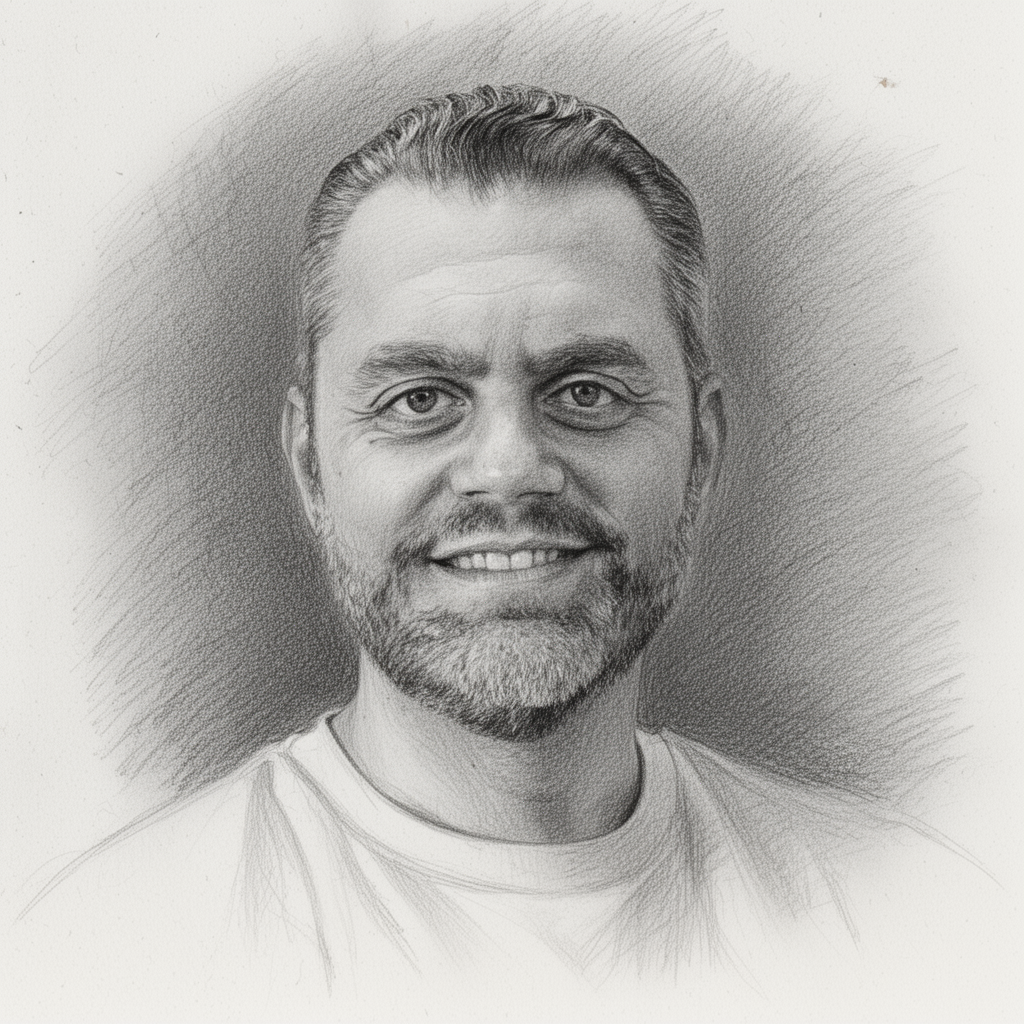
Who Is Shawkat Kabbara?
Shawkat Kabbara is the CEO of Papr, a company building what he calls "predictive memory for AI agents." Before founding Papr, he worked on machine learning and AI at Microsoft, Apple, and Facebook — including building voice experiences at Apple during the Siri era. That experience with voice agents, where every millisecond matters and context retrieval can make or break the user experience, shaped his conviction that the industry's approach to AI memory was fundamentally wrong.
Where most AI infrastructure companies are racing to build faster search, Shawkat asked a different question: what if the system could predict what context you need before you ask for it? Papr's four-tier architecture — modeled on how the human brain organizes working memory, episodic memory, long-term memory, and neural pathways — is his answer. It's the kind of product that could only come from someone who spends his mornings reading neuroscience papers and his afternoons writing prediction models.
"Everyone's trying to engineer context, but we predict it," he told us. That single line captures both the technical insight and the founder: someone who looks at what the industry accepts as normal and sees an entirely different way forward.
The Archetype: The Sage
The Sage
The Magician
Tests & Allies
Shawkat's core drive is understanding. In our conversation, his energy peaked not during the competitive positioning discussion or the go-to-market strategy — it peaked when we started exploring how the human brain uses dreams to optimize memory, whether emotion could serve as a signal for AI retrieval, and what consciousness might mean for future architectures. He was reading a neuroscience research paper the morning of our interview — not as preparation, but because that's what he does.
His secondary archetype is The Magician. The Sage wants to understand hidden systems; the Magician transforms that understanding into something practical. Shawkat's insight that retrieval gets worse with more data — and that prediction inverts this scaling problem — is classic Magician thinking: revealing a mechanism that changes how everyone else sees the problem.
"It's very philosophical. I like this discussion. It's getting me thinking about how we can even further add more value into this architecture."
The Hero Match
Daedalus
In Greek mythology, Daedalus was the master craftsman who built the Labyrinth of Crete. But what made him legendary wasn't the labyrinth itself — it was his superpower: observing natural systems and translating them into engineered solutions no one else could conceive. He studied bird flight and built wings. He observed the structure of mazes and designed the most complex one ever built.
Shawkat operates with the same instinct. He studies how the prefrontal cortex manages working memory, how the hippocampus processes episodic memory, how neural pathways form connections between disparate information — and he translates each of these into a corresponding tier of his prediction architecture. When he described how the brain uses dreams to "predict the future and optimize what information is needed when you wake up," he immediately connected it to his product's cache prediction system. Most founders borrow metaphors from biology. Shawkat treats biology as a design document — and like Daedalus, the machines he builds feel inevitable because they mirror the systems they're modeled on.
Tony Stark — Marvel Cinematic Universe
Not the Avengers leader or the battlefield commander — the version of Tony Stark alone in his lab in Iron Man, running simulations, talking to JARVIS, iterating one component at a time. Shawkat's energy in our conversation had that same quality: deeply technical, genuinely excited by the engineering puzzle, most alive when explaining how the pieces fit together.
When he walked through his eight prediction models and showed how the tier system decides which database to hit, he had the same "let me show you something cool" energy Stark has when demonstrating a new prototype. And like Stark, his core thesis is that intelligence comes from prediction and anticipation — JARVIS is valuable because it knows what Tony needs before he asks.
"We have eight prediction models. So we're doing a bunch of things to stitch this together."
The Story Behind Papr
Papr exists because Shawkat spent years inside big tech companies watching the same problem go unsolved. At Apple, building voice experiences for Siri, he learned a hard constraint: a voice agent needs to respond in 400-500 milliseconds — that's the natural pace of human conversation. But if you want to personalize that voice experience by pulling relevant context from a RAG pipeline, the pipeline alone eats up 500 milliseconds. Add speech-to-text and text-to-speech processing, and you're looking at one to two seconds of delay. "Not acceptable," he said flatly. "It just doesn't work."
That frustration — watching a technical limitation block an experience he knew should be possible — is what planted the seed. But the breakthrough didn't come from building a faster search engine. It came from reframing the problem entirely: what if the system could predict what context you'd need before you asked for it? Shawkat and his team built prediction models that learn from usage patterns, feedback loops, and task structures — and discovered something counterintuitive. While search-based retrieval gets worse with more data (a phenomenon they named "retrieval loss"), prediction-based retrieval stays flat or actually improves. The more data you add, the better the predictions get.
The founder's journey: Machine learning engineer at Microsoft, Apple, and Facebook → recognized the retrieval bottleneck during the Siri era → reframed retrieval as a prediction problem → built a brain-inspired four-tier architecture → now proving the architecture at scale with 22,000+ personal memories and growing enterprise customers.
The company's journey: Identified the retrieval loss problem → built predictive memory as the solution → four-tier architecture (working set, episodic, long-term, neural pathways) → SDK + MCP server + CLI for developers → preparing open-source launch and on-device prediction for voice agents → proving product-market fit with voice and B2B enterprise customers.
The Sage who couldn't stop studying the brain ended up building a memory system that mirrors the brain — and the company's journey from insight to architecture to product tracks the founder's own journey from curiosity to conviction.
How Shawkat Leads
Shawkat leads by building shared understanding. In our conversation, decisions were always narrated as collective discoveries: "we discovered," "we learned," "we built." Even the core architectural insight that defines Papr came out as "one of the core things we discovered." He positions himself inside the team rather than above it, and his default mode is to explain — patiently, layer by layer — until everyone in the room can follow.
But on the fundamental architectural bet — prediction over search — he shows clear, unhedged conviction. When I brought up RAG and vector search, he didn't equivocate. He laid out the evidence, cited the Google research paper on physical limits of embedding dimensions, and drew a definitive line. That combination — genuine intellectual humility in execution, deep conviction on direction — is what gives his leadership its texture.
"We need to build more knowledge about ourselves. I think we need to learn more about how we work."
Founder Superpowers
Turning Nature into Architecture
Shawkat doesn't borrow metaphors from biology — he reverse-engineers biological systems into engineering specifications. Each tier of Papr's memory system maps directly to a brain function: prefrontal cortex for working set memory, episodic memory for recently cited context, long-term storage for everything accumulated, and neural pathways for cross-connected relationships. When the topic of dreams came up, he immediately translated it into a product concept: the brain's dream state as a prediction optimization layer. His architecture feels inevitable rather than invented because it's grounded in how intelligence actually works.
Reframing the Problem Everyone Accepts
The shift from "retrieval accuracy" to "retrieval loss" is more than a branding move — it flips the entire mental model. Instead of asking "how accurate is my retrieval?" developers now ask "how much am I losing as I scale?" That reframe, combined with the inversion that prediction gets better with more data, makes the rest of the industry's approach sound like a workaround. He named something the market was experiencing but hadn't articulated.
Making Complexity Disappear
In a single conversation, Shawkat walked through eight prediction models, a four-tier memory system, three database backends, and a custom graph ontology system — and none of it felt overwhelming. He layers explanations so each concept builds on the previous one, and by the time his listener summarizes the idea, the summary is accurate because the explanation was structured to land that way. It's a rare teaching superpower: making the other person feel like they figured it out themselves.
What It's Like to Work with Shawkat
Working with Shawkat means working with someone who will always want to go one level deeper. In our 42-minute conversation, he never rushed past a question — he built each answer from first principles, connecting technical architecture to neuroscience to user experience. He's the kind of leader who would rather spend time explaining why a decision makes sense than simply announcing what the decision is.
He's genuinely collaborative. When I offered ideas about emotion as a missing dimension in AI architecture, he didn't deflect or redirect to his own roadmap — he leaned in: "I really love how you're taking the brain and inspiring me to even build a better product." He takes input seriously, and his team likely operates in an environment where good ideas are welcome regardless of where they come from.
"I also learned a lot from this, so really appreciated this discussion."
His pace is deliberate. He's not the founder who fires off decisions in Slack at midnight — he's the one who structures a framework, walks the team through the logic, and makes sure everyone arrives at the understanding together. That can mean slower decision cycles on tactical matters, but on strategic bets, the clarity is earned.
Why This Matters (For You)
If You're a Developer Building AI Agents
Shawkat's core insight — that retrieval degrades with scale in search-based systems — is worth sitting with regardless of whether you use Papr. If you're building agents that need context from large data stores (enterprise knowledge bases, customer conversation histories, multi-agent orchestration), the question isn't "which vector database should I use?" It's "am I solving a search problem or a prediction problem?" Papr's four-tier architecture offers one answer, but the mental model shift from reactive retrieval to predictive context is the lesson that applies everywhere. Ask yourself: does your system get smarter as your data grows, or does it just get noisier?
If You're an Engineer Building Memory or Retrieval Systems
The most transferable insight from Shawkat's approach is his method: study biological systems, not just computer science literature. His four-tier architecture didn't come from a database whitepaper — it came from studying how the prefrontal cortex handles working memory, how the hippocampus manages episodic recall, and how neural pathways form cross-connections during sleep. Whether or not you buy the specific architecture, the practice of looking outside your discipline for design inspiration is what separates incremental improvements from paradigm shifts. If you're stuck on a system design problem, try reading a neuroscience paper instead of another engineering blog post.
If You're Early in Your Career
Shawkat's path — from machine learning roles at Microsoft, Apple, and Facebook to founding an AI infrastructure company — is a reminder that the best startup ideas come from sustained proximity to a specific problem. He didn't have a startup idea and then go looking for a problem. He spent years building voice experiences and AI systems inside large companies, watched retrieval break at scale over and over, and eventually saw a solution that the incumbents couldn't see because they were optimizing within the existing paradigm. The career lesson: stay close to problems you find genuinely interesting, go deeper than your job requires, and read outside your field.
If You're Considering Joining Papr
Shawkat is the kind of leader who explains his reasoning rather than asserting his authority. In our conversation, every architectural decision was narrated with the logic behind it — why prediction over search, why four tiers, why a graph ontology layer. That suggests a culture where "why" matters more than "what" and where understanding the system is expected, not optional. If you thrive in environments where you're expected to think deeply about problems and contribute ideas (even to the CEO), Papr is likely a fit. If you prefer clear directives and fast execution cycles, the depth-first culture might feel slower than you'd like.