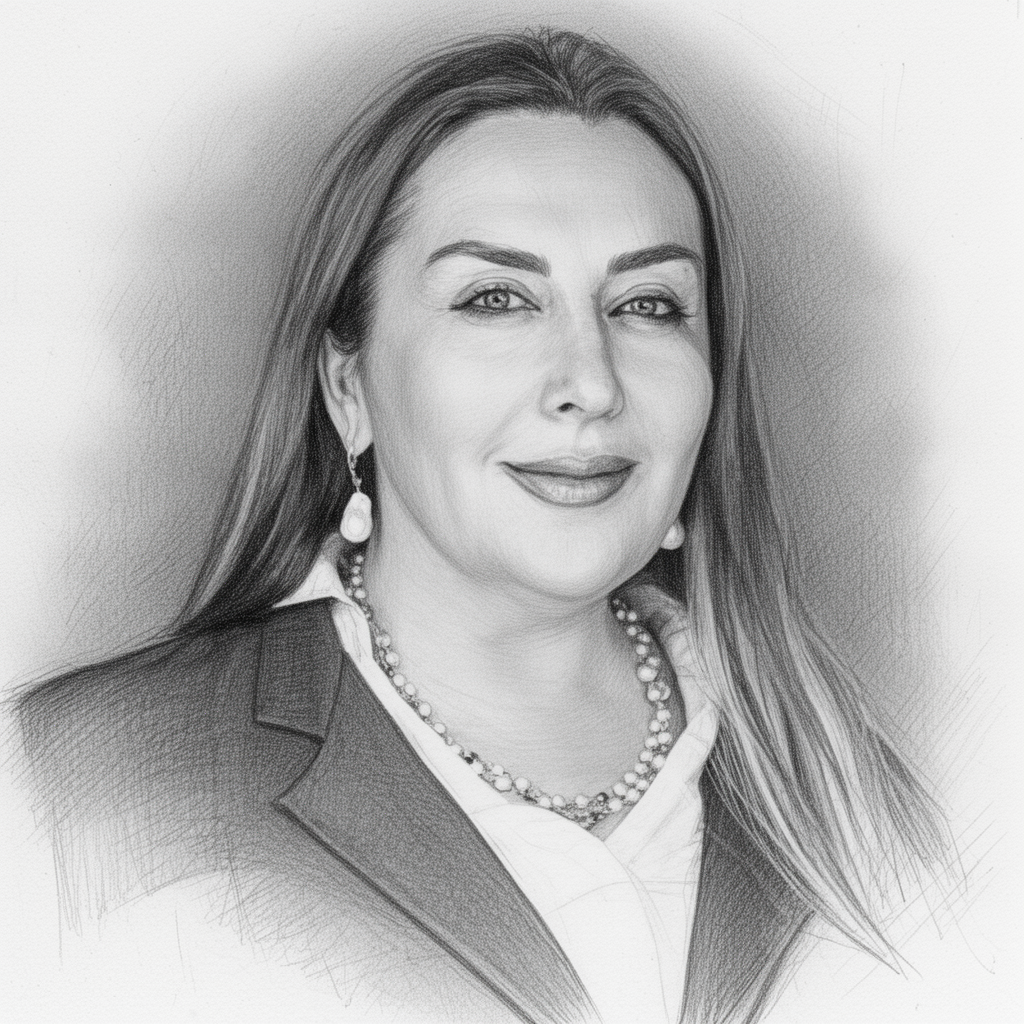
Who Is Olga Beregovaya?
In 1997, Olga Beregovaya sat down and started building a lexicon by hand — word by word, rule by rule, constructing the machinery that would let a machine move text from one language to another. It took one to two years to add a single language. She had two and a half degrees in linguistics. She was drawn to understanding how language actually works, not as an abstraction but as a system you could build with.
Twenty-seven years later, she's VP of AI at Smartling, and the technology she spent her career building is being replaced by something she didn't predict. Large language models don't translate — they generate. They skip the source language entirely, producing content directly in the target language from a brief or a knowledge base. The paradigm she helped perfect — source to target, target to source, verify — may not survive the decade.
What makes Olga worth listening to isn't the prediction. It's that the person making it is the same person who built the thing being disrupted — and she's not mourning it. She's curious about what comes next, concerned about the 7,200 languages that weren't in the training data, and still building quality frameworks inside a field she believes is transforming into something else entirely.
The Archetype: The Sage
The Sage
The Sage
The Return
Every conversation with Olga becomes a masterclass. She doesn't just answer questions — she builds a framework around them, installs the vocabulary you'll need, and then walks you through the landscape she's mapped over three decades. When asked a naive question like "so is this basically searching?", she doesn't correct impatiently. She lights up. The opportunity to teach is where her energy peaks.
Her Sage archetype shows up in the precision of her language. She doesn't say "translation is changing" — she explains that "source, target, source, target" is a specific paradigm, that it defined the field for decades, and that it's "not going to live for long." She introduced at least three specialized concepts during the conversation — transcreation, modelese, and linguistic colonization — each time defining the term, placing it in a taxonomy, and then illustrating why it matters.
But Olga isn't a pure Sage sitting in a library. She carries a secondary Magician archetype — someone who reveals hidden transformations. Her prediction about translation dying isn't an academic observation. It's a paradigm shift announcement from someone standing inside the building as the foundations move. She's not rebelling against the system; she's showing you the forces that are about to reshape it.
"There are about 7,200 languages in the world... and the question is, what happens to the ones that weren't in the training data?"
The Hero Match
Hypatia of Alexandria
Hypatia was the last great scholar of the Library of Alexandria — a mathematician, philosopher, and teacher who stood at the intersection of multiple intellectual traditions and watched the knowledge system she helped maintain come under existential pressure from forces larger than any individual could control. She responded not by retreating but by teaching more fiercely, by building understanding across disciplines, and by arguing for the preservation of what mattered.
The parallel to Olga is specific and unforced. Olga watched translation technology evolve from hand-built lexicons — painstaking scholarship, one rule at a time — to systems that may render the entire translation paradigm obsolete. Like Hypatia, she didn't protect the old way or deny the new one. She kept building quality frameworks, kept advocating for under-resourced languages, and kept explaining what's happening. Hypatia's concern was for the knowledge that would be lost in the transition. Olga's is for the 7,200 languages — and the cultures they carry — that might not survive it.
Dr. Ellie Arroway — Contact (1997 film, Jodie Foster)
Specifically, Arroway at the Congressional hearing — after she's experienced something paradigm-shifting but can't prove it in terms the existing system accepts. She spent her career listening for signals, and when she finally received one, what she brought back was too transformative for conventional frameworks.
Olga has that same quality. She's spent 27 years inside translation technology, and what she's bringing back is the message that the entire paradigm is ending. She has the credibility of someone who built the thing she's now predicting will die — and like Arroway, she's calm about it. Not panicking. Reporting. Her concern isn't for her own career. It's for what gets lost in the transition.
"Source, target, source, target... not going to live for long."
The Story Behind Smartling
The Founder's Journey ↔ The Company's Journey
Linguistics student → hand-built lexicons in 1997 → rode every paradigm shift (statistical, neural, transformer, LLM) → arrived at the thesis that translation itself may die → now in teaching/advocacy mode for under-resourced languages and quality frameworks.
Translation management platform → AI-powered quality benchmarking → model-agnostic evaluation system → now positioning as the AI translation system that helps enterprises navigate a landscape where "10 new models were released while you were sleeping."
The parallel: both Olga and Smartling evolved from doing translation to understanding translation at a meta-level. Olga went from building lexicons to predicting their obsolescence. Smartling went from managing translations to benchmarking which AI model translates best — and why. The Sage archetype drives both: the deepest value isn't in doing the work, it's in understanding the work well enough to know what's changing and why.
How Olga Leads
Olga holds her intellectual positions with clarity. "Translation will die" isn't a committee-approved forecast — it's her thesis, stated plainly, based on 27 years of pattern recognition. When she's thought about something deeply enough to have a position, she doesn't hedge it. She doesn't poll the room. She says what she sees.
But execution is collective. When describing Smartling's benchmarking work, quality frameworks, or model evaluation processes, the language shifts to "we" — "we take the decision-making pain out of the equation," "our entire ecosystem allows us to phase one model in, phase one model out." She draws a clean line between personal conviction and team execution.
Founder Superpowers
Turning complexity into a teachable map.
When Olga described 27 years of translation technology, she didn't just tell the history — she organized it into eras with clear boundaries and transitions, giving listeners a framework they can hold in their head after one conversation. That's not just knowledge — it's the ability to make the complex navigable.
Predicting obsolescence from inside the machine.
Most people who predict disruption have already left the building. Olga is still inside Smartling, still building quality systems, and simultaneously announcing that the paradigm she built on is ending. The credibility comes from being inside the system she's forecasting the end of.
Making invisible cultural stakes visible.
When others in AI translation talk about speed and cost, Olga shifts the conversation to what gets lost — 7,200 languages and the cultures they carry. She moves the frame from efficiency to consequence.
The core tension: Architect vs. Prophet.
Olga spent 27 years building the infrastructure of translation technology with patience and precision. Now she's predicting that the thing she built may not need to exist in its current form. She's neither nostalgic nor nihilistic — still building inside a system she believes is transforming into something else. That tension between making things work precisely and seeing that the thing being made may become obsolete is what makes her compelling.
What It's Like to Work With Olga
Working with Olga means learning something new every conversation. Her teaching instinct isn't performative — she genuinely enjoys building frameworks and sharing them. When she introduces a concept like "modelese" (machine-generated text that reads as obviously artificial), she doesn't just name it. She defines it, places it in context, explains why it matters, and gives you the vocabulary to spot it yourself. She equips the people around her.
She's deliberate. She lets questions land before answering. She builds arguments step by step, expects the listener to track the logic, and signals what she's about to do before she does it. That meticulousness extends to her standards — Smartling's 12-metric quality framework exists because she believes measurement matters and hand-waving doesn't.
But she's not rigid. Her curiosity takes her on tangents — from transcreation theory to AI poetry to the philosophical implications of chatbot addiction. She follows ideas wherever they go, which means her team is probably used to meetings that start as status updates and end as deep-dives into something nobody expected to discuss that morning.
"Always look for the 11th idea. The first 10 are obvious. The 11th is the one that changes everything."
Why This Matters (For You)
If You're Managing Global Content and Localization at an Enterprise
You're navigating a landscape where new translation and localization models release faster than your team can evaluate them — and "10 new models were released while you were sleeping" isn't hyperbole. Olga's insight is that you don't need to pick the single best model; you need a quality benchmarking system that can measure which model performs best for your specific content types and adapt as new ones emerge. Her 27-year perspective on AI translation reveals the core tension: automation is powerful but it comes with hidden costs — machine-generated text reads differently than human translation, LLMs don't handle out-of-distribution languages equally well, and the quality of localization depends not just on speed but on whether the system balances automation with human expertise at the right points. Smartling's model-agnostic approach to quality evaluation means you're not locked into betting on today's winner; you can phase models in and out based on semantic accuracy, statistical measures, and edit distance, ensuring your global content stays competitive as the technology landscape shifts under you.
If You're an Engineer Building AI Systems
Olga's 27-year arc through every paradigm shift in translation technology — rule-based, statistical, neural, transformer, LLM — is a case study in how to think about AI systems that don't stand still. Her key insight: the models you're building today will be replaced. What survives isn't the model — it's the quality framework around it. Smartling doesn't bet on a single model; they built a benchmarking system that evaluates models across semantic, statistical, and edit-distance dimensions so they can phase one out and phase another in without disrupting customers. If you're building AI infrastructure, her question is worth sitting with: are you building something that depends on today's model, or something that works regardless of which model wins next quarter?
If You're Early in Your Career
Olga started in 1997 hand-building lexicons — word by word, rule by rule, one to two years per language. Now she's VP of AI at a company where a single API call does what used to take her years. Her career didn't survive by clinging to the old method. It survived because she was always more interested in understanding language than in any particular tool for processing it. Her advice — "always look for the 11th idea, the first 10 are obvious" — is about cultivating the kind of curiosity that outlasts any technology cycle. If you're choosing between NLP, translation AI, or adjacent fields, her trajectory shows what a 27-year career looks like when you follow the problem instead of the tool.
If You're Considering Joining Smartling
Olga's leadership style tells you a lot about the culture. She holds intellectual positions with clarity — "translation will die" is her thesis, not a committee-approved forecast — but execution is collective. She draws a clean line between personal conviction and team ownership. Working with her means learning something new every conversation: she teaches by equipping you with vocabulary and frameworks, not by telling you what to think. Her team is currently hiring data scientists and language technology experts, and if you're the kind of person who'd rather build a quality benchmarking system than chase the latest model release, this is probably your environment.
Go Deeper
Watch the full conversation: Olga Beregovaya on Heroes Behind AI — She spent 27 years perfecting translation. Now she says it's dying.
Join Smartling: Now that you know how Olga leads, see if there's a role for you. Smartling is actively hiring data scientists and language technology experts. smartling.com/careers
Join Smartling
Now that you know how Olga Beregovaya leads, see if there's a role for you.