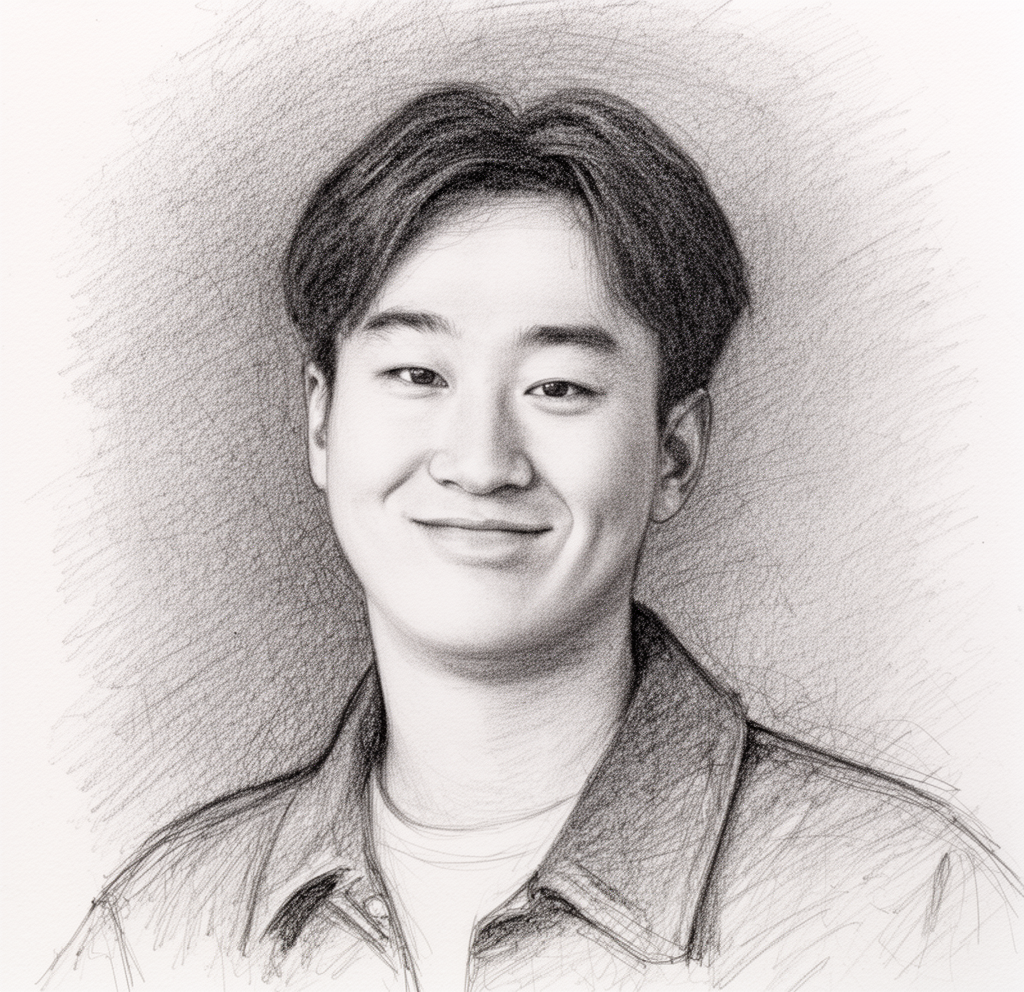
Who Is John Kim?
John Kim is a builder who refused to stop, even at 3am, hungry and delirious, when everything told him to quit. An Australian-raised founder who came to Silicon Valley through a serendipitous business trip, he accidentally discovered the recruiting problem while building something else. That accident became Paraform — an Agentic Hiring Platform that's raised $65M to date, scaled to 100 employees, and a network of the world's best recruiters. But John isn't a typical Silicon Valley founder obsessed with scale or AI replacing humans. He's the rare founder betting his entire company on the opposite: that human judgment matters more in the AI era, not less.
What makes him unusual isn't his growth story — it's his relationship to difficulty. Most founders talk about scaling. John talks about something darker and more honest: "It actually gets harder over time. And I actually think learning that I actually enjoy that was like a huge unlock for me."
The Archetype: The Creator
The Creator
The Sage
The Return
The Creator is driven by one question: what if things could be different? John embodies this archetype through his unwillingness to accept the recruiting status quo. When he looked at hiring, he didn't see a solved problem — he saw a broken matching system. "There's actually a lot of parallels with real estate," he explained, where information asymmetry is the real barrier. Knowing what's coming to market changes everything.
But his Creator energy shows up most clearly in his restlessness. He's built at least three different versions of Paraform, pivoted multiple times, and still isn't satisfied with the tools recruiters use. "The tools can be so much better," he said. That dissatisfaction with the status quo, that itch to build toward something better — that's The Creator speaking.
His secondary archetype is The Sage — the philosopher-builder. He doesn't just build products; he builds frameworks to understand the world. The recruiter-as-matchmaker philosophy, the information asymmetry model, the insight that "getting the right person to work on the right problem is the fastest way to solve the problem" — these are systems of thought, not just business observations. John thinks in patterns and principles first, then grounds them in reality through stories.
The Hero Match
Odysseus
John is Odysseus after Troy, not during it. He didn't set out to find recruiting — he got lost in a web3 pivot and found it by accident. Like Odysseus, his journey home is longer and harder than expected. The real estate analogy he used reveals this: "If you know information about what houses are coming onto the market, things become a lot easier." That inside information — access and trust — is what the whole journey is about.
Most importantly, Odysseus wins not through superhuman strength but through cunning, patience, and team. John's competitive edge isn't a secret algorithm. It's "the best recruiters in the United States and the world who have the strongest networks." He didn't build a boat (the technology). He built a crew (the network). And like Odysseus, he's now in the return phase — thinking about legacy. "Paraform becoming a meta agency for engineers and other professions" signals he's already thinking beyond Paraform itself, about what comes next.
The DoorDash moment at 3am is his siren call — the moment he almost surrendered to the difficulty. He didn't. He worked.
Tony Stark in Iron Man 1
John operates in Tony Stark's first-film mode: the genius learning that arrogance (or in John's case, naivete) gets you 10% of the way, and the other 90% requires patience, systems, and team. Tony makes the suit because he's trapped in a cave with no other choice. John built Paraform the same way: "We had our first few customers who were struggling to hire and they would pay us this much to make a hire. That was our only goal."
But the deeper parallel is the transformation. Tony starts believing he can do it alone. By the end, he realizes that "billionaire, genius, philanthropist" doesn't work without Pepper and JARVIS and the team. John's arc is identical: from thinking he could build a web3 recruiter tool to realizing that the only path forward was building alongside the world's best recruiters, then living with his co-founder because the problem is too hard to solve alone.
Both characters share the core trait: relentless problem-solving that morphs into relentless team-building.
The Story Behind Paraform
The founding story of Paraform isn't the glossy version you hear on pitch stages. It's the 3am version — the moment John almost broke.
For four months straight, John and his co-founder Jeffrey biked from Marina (their first office) to Mission (Jeffrey's apartment) every single day. They'd start at 8am and wouldn't stop until 3am. The goal was simple: get their first marketplace hire. The marketplace needed roles. They found roles. Then they needed recruiters. They found recruiters. But the flywheel wouldn't spin.
Then one night, they thought they had it. An offer was about to close — their first real revenue moment after months with nothing. They came back from a ride, exhausted and hungry. They stopped at DoorDash, ordering food, and in that liminal space between despair and hunger, something broke. "We were delirious," John said. "All these ideas popping up."
One of them said, "What if we combine TikTok and DoorDash?"
It was absurd. It was the sound of two founders losing their minds. He laughed about it years later, but in that moment, it was the whisper of surrender. For ten minutes, they brainstormed a completely different company because the recruiting one was too hard.
Then something happened that changed everything. A recruiter in the UK emailed them saying something was broken in the system. "We're like, yeah, let's get back to work."
That's it. Not a pep talk. Not a moment of clarity. Just a recruiter saying "something is broken" and both of them snapping back to work. The problem was too important. The people were too real.
The Founder's Journey and The Company's Journey
Failed in web3, discovered recruiting was a matching problem, survived the cold-start crisis (8am-3am for four months), nearly quit at 3am with TikTok/DoorDash delusion, a recruiter's email brought him back, scaled through pain (throwing up from stress at 50-70 employees), built a team, now thinking about "act two" and legacy.
Web3 scraper, recruiting marketplace, no revenue for a year, 3-person team grinding, 100 employees, $65M raised, $50+ million paid to recruiters, building toward universal talent infrastructure across all professions.
The same Creator energy drives both. John couldn't stop building because the problem called to him, not because venture capital demanded it. And as Paraform grew, it didn't flatten him — it deepened his conviction that the hardest problems are also the most important ones. "It gets harder over time. And learning that I actually enjoy that was like a huge unlock for me."
The company became a vessel for that belief. Paraform doesn't exist to replace recruiters with AI. It exists because John believes matching talent to opportunity is humanity's most consequential problem, and it takes humans (supported by AI, not replaced by it) to solve it.
How John Leads
John leads as a consensus-builder with a backbone. He credits his co-founder, his team, his advisors — but not as a deflection. When he talks about decisions, he names specific people and explains what they brought. That's not PR. That's how he actually thinks about building.
But he has one non-negotiable: the idea of "binary outcome." "You either win or lose and there's nothing in between," he said. Not 70% win, not a soft landing — win or lose. That clarity runs through every decision. It's not brutal; it's clarifying. When facing the DoorDash breaking point, there was no thought of pivoting or pivoting again. "It didn't even enter our stream of thought or consciousness," he said. Quitting wasn't an option.
He's also remarkable for his humility about expertise. When asked if he was the best person to answer questions about staying relevant in the AI era, he said: "I don't know if I'm the best person to ask." Not false modesty — genuine uncertainty followed by his best thinking. He's a first-time founder twice over, solving new problems every day, and he's honest about it. That honesty gives him authority.
Building vs. Belonging
John's core tension is between his drive to build something world-changing and his simultaneous need for deep human connection to survive the building. He can't do either alone, and he knows it. This is why he lives with his co-founder. This is why "if one is having a bad day, one's having a good day" is a company value. He's building a marketplace at scale (ambition) but doing it through the tightest human unit possible (belonging). The tension energizes him: "I actually enjoy that. I look at the barrel of challenges and go, that sounds fun" — but only because he's not alone.
Founder Superpowers
Breaking Hard Problems Into Their Component Parts
John doesn't attack complex marketplaces as wholes. He layers them — discovery, matching, access, trust. When he explained Paraform for an elementary schooler, he didn't simplify the pitch; he got to the core of what matters: connecting people to opportunity. He has an almost architectural instinct for seeing which pieces matter and which are noise. It's why he can explain a company that's raised $65M with seed-stage clarity.
Building a Culture That Feeds on Difficulty
Most founders talk about scaling as a victory lap. John inverts it. "It actually gets harder over time," he said, then reframed it as the unlock: "I actually enjoy that. I look at the barrel of challenges and go, that sounds fun." His superpower isn't surviving hard problems — it's building a mindset where difficulty becomes fuel. Paraform's "binary outcome: you win or lose" value tells you he's built that same clarity into the culture.
Staying Tethered to Signal Over Narrative
The 3am DoorDash moment is the key. John was delirious, brainstorming totally different companies because Paraform wasn't working. Then a UK recruiter emailed saying something was broken. And just like that, he was back. He didn't rally himself with optimism. He didn't rewrite the narrative. He responded to someone closer to the problem than he was — the ability to quiet his own voice and listen for the actual signal.
What It's Like to Work With John
If you get on a call with John, you'll notice he doesn't rush. He thinks before he speaks. He respects your space to finish questions. He's not the type to interrupt with energy; he's the type to pause and consider. But when he speaks, it lands because he's thought about it. That measured pace makes him feel thoughtful, not slow.
He's also unusually honest about difficult moments. When asked about the hardest thing about building Paraform, he didn't hedge. He talked about waking up and throwing up. About being delirious at 3am. About not knowing how to solve the problem. Most founders would soften that with a "but we figured it out" pivot. John sat in it. He admitted the difficulty without immediately reframing it as a learning moment. That created permission for real conversation.
What stands out most is his combination of pragmatism and idealism. He'll talk about the recruiter network effect, information asymmetry, and marketplace dynamics with the precision of a systems thinker. Then he'll pivot to philosophy — about what makes humans valuable, about the "most consequential matchmaking problem in the world," about why matching talent matters more than education (though education matters too). He's comfortable in both modes. That means he can speak to engineers who love rigor and operators who care about vision.
If you join Paraform, you'd be working alongside someone who believes in you as a person (he hires for fit, not just skill) but will also push you hard because the problem demands it. He'd give you real feedback, not performance review language. He'd admit when he doesn't know something and ask for your help. And he'd probably ask thoughtful questions that reveal he's been thinking about your growth, not just your productivity.
Why This Matters (For You)
If You're a Founder or Hiring Manager Struggling to Fill Roles
John's core insight is that recruiting is an information asymmetry problem, not a technology problem. "There's actually a lot of parallels with real estate," he explained — the person with early access to what's coming to market has the advantage. If you've been throwing job postings into the void or cycling through agencies that don't understand your technical stack, Paraform's model is worth understanding: instead of building AI to replace recruiters, they built a platform to make the best human recruiters dramatically more effective. The question for your hiring process: are you solving a discovery problem or a matching problem? They require different approaches.
If You're Early in Your Career
John's arc is a masterclass in the long game. He failed in web3, accidentally found recruiting, spent four months biking between Marina and Mission working 8am to 3am with zero revenue, and nearly quit over a DoorDash order at 3 in the morning. What saved him wasn't a grand vision — it was a recruiter in the UK saying "something is broken." The lesson: early-career breakthroughs rarely come from clarity. They come from staying close enough to a real problem that when the signal arrives, you're there to hear it. John didn't plan Paraform. He earned it by refusing to leave the building.
If You're Considering Joining Paraform
This profile tells you what a job listing can't: how John actually thinks, communicates, and makes decisions when nobody's watching a pitch deck. He's measured, not fast. He admits uncertainty before offering his best answer. He distributes credit by name. He holds a "binary outcome" conviction — win or lose, no middle ground — but pairs it with genuine humility about what he doesn't know. If you thrive in environments where the work is hard, the feedback is direct, and the leader is honest about the difficulty rather than hiding behind optimism, this is the culture John is building. The "What It's Like to Work With John" section above is the closest thing to a trial day you'll get without interviewing.
If You're an Engineer Building Recruiting or Marketplace Infrastructure
John's architecture philosophy is worth studying: he decomposed recruiting into discovery, matching, and access layers, then built the platform around the layer most people ignore — the human network. While competitors bet on AI replacing recruiters, Paraform bet on AI augmenting them. "The tools can be so much better," he said, but the moat isn't the tool — it's "the best recruiters in the United States and the world who have the strongest networks." If you're building marketplace infrastructure of any kind, the question John's approach raises is sharp: are you building the boat, or are you building the crew? The cold-start problem he solved (roles need recruiters, recruiters need roles) is the same two-sided flywheel challenge every marketplace engineer faces. His answer was to start with the supply side and earn trust one recruiter at a time.
Go Deeper
Watch the full conversation: John Kim on Heroes Behind AI
Join Paraform
Now that you know how John Kim leads, see if there's a role for you.