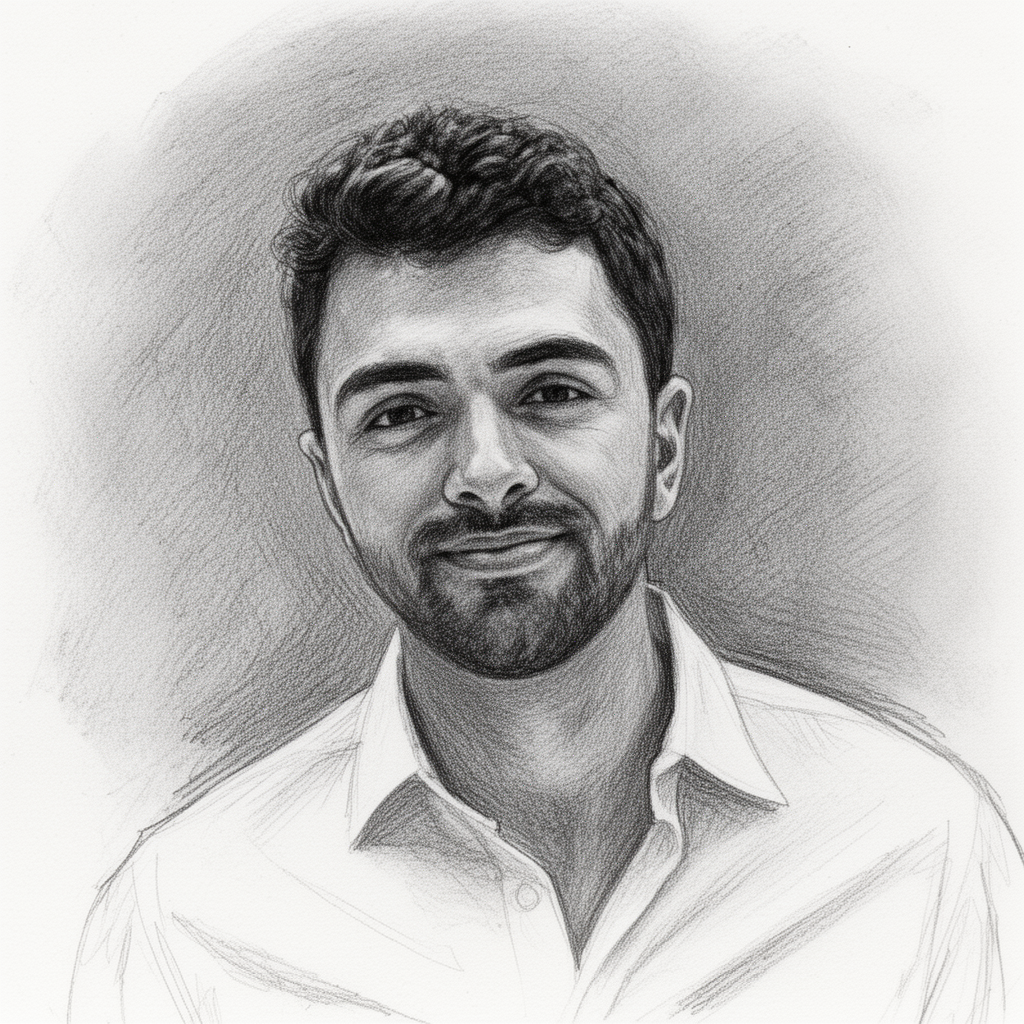
Who Is Dara Ladjevardian?
Dara didn't start Delphi because he thought AI could disrupt knowledge. He started Delphi because he wanted to ask his grandfather for advice.
It's a small difference, but it changes everything. Most AI founders chase the problem they think will be huge in five years. Dara pursued the problem that was already real for him: his grandfather was gone, but his wisdom wasn't available. He built a digital version of him to talk to and learn from. And then he realized: everyone has a version of this problem. Everyone wants to learn from people they trust, but access is constrained by geography, time zones, and the simple fact that humans are finite.
Today Delphi is a platform where experts create digital versions of their minds — Delphis — that answer questions 24/7. Taylor Swift's Delphi for fans. Arnold Schwarzenegger's Delphi for people wanting to ask him directly. A founder's Delphi for candidates before they interview. A consultant's Delphi for clients who have follow-up questions.
But underneath the product is a deeper bet: Dara believes that in a world where AI can generate knowledge infinitely, human knowledge becomes the scarce resource. Not the facts you can look up. The lived experience. The reasoning. The specific way one person solved a problem based on their particular failure and resilience.
"Humans become the scarce resource," he said in our conversation. That's not market speak. That's a conviction he's building toward, patiently, willing to let people think Delphi is weird until they understand why it matters.
The Archetype: The Creator
The Creator
The Sage
Tests & Allies, Moving into The Return
The Creator doesn't wait to see what the market wants. The Creator sees a gap no one else is looking at and fills it. Dara embodies this completely.
He didn't research "what features would make an AI tool sticky?" He created a digital version of his grandfather because he had a real need. The product evolved from there. "I wanted to get his advice on what I was doing...and that experience just got me really interested in how we access other people."
This isn't a story arc that fits the typical startup narrative. It's personal first. The market follows.
His commitment to what Delphi should be (not what it should do) is the mark of a true Creator. "I've learned that shiny features are the way to a company's death." When celebrities and investors come with wild ideas — generate videos, make phone calls, build custom apps — Dara says no. Not "maybe later." Just no. "The product works the way it is, either you're happy with it or you're not."
His secondary archetype is The Sage. The entire architecture of Delphi is an epistemological question: how do you represent a human mind faithfully? The temporal knowledge graph. The distinction between "strict" mode (only answer questions I know) and "adaptive" mode (infer what I might say in new situations). The obsession with preventing hallucination so that Delphi can't make the owner look bad. These are philosophical problems dressed up as product problems. Dara cares deeply about how knowledge is preserved and transmitted. That's The Sage.
"His secondary archetype is The Sage — his entire approach to knowledge architecture reveals a creator who thinks first about how wisdom is preserved, then about how it scales."
The Hero Match
Prometheus
In Greek mythology, Prometheus doesn't just steal fire. He believes humans deserve fire to reach their potential. He's willing to face consequences for giving humans that gift.
Dara is Prometheus for a different fire: he's returning human wisdom to scale. In a post-AGI world where machines can generate endless answers, he's built infrastructure so that human experience — the hard-won kind, the learned-through-failure kind — can be distributed. That's a gift.
Like Prometheus, Dara has already faced consequences. The OpenAI ban. The moment where Delphi helped a political figure create a digital profile, violating platform terms, and Dara couldn't contact anyone at OpenAI or Anthropic. "I thought the company was literally over. Everything in the product is breaking." That was the moment where his conviction was tested. But he didn't compromise. He found another way. That's Prometheus too.
Mr. Miyagi — The Karate Kid
Mr. Miyagi's whole philosophy: "The best way to learn is from someone who's been there before."
Dara: "24-7 office hours for the person that you want to access or learn from."
Mr. Miyagi doesn't give Daniel rules. He gives him a practice (wax on, wax off) and lets him discover the principle. Dara isn't trying to replace human expertise with AI. He's trying to scale it. The knowledge graph isn't magic. It's scaffolding. It lets you learn from someone who's done what you're trying to do.
The deeper match is in discipline. Mr. Miyagi refuses flashy solutions. He builds foundation. Dara has the same energy: reject the shiny, stick with the true. Both of them are teachers. Both believe the unglamorous path is the only path that holds.
The Story Behind Delphi
The Founder's Journey ↔ The Company's Journey
Realized the gap in how we access human wisdom → created a personal tool to solve it → discovered it wasn't just his problem → built infrastructure so anyone could solve it too → now facing the largest question of all: in a post-AGI world, what becomes valuable?
Personal AI tool for Dara → early users asking for the same thing → platform for experts to create Delphis → celebrity adoption (Arnold, Jay Shetty) → pivot to professional use (candidates interviewing, leaders answering inbound, consultants scaling themselves) → building toward a knowledge network where people are discovered by match of thought, not just follower count → eventual goal: rethinking what learning looks like when expertise is always-on and available 24/7.
The parallel is exact. Dara wanted to learn from his grandfather. Now he's building a world where anyone can learn from anyone, anytime. His personal story became the company's story.
How Dara Leads
Dara leads with conviction, not consensus. When he narrates past decisions, it's "I think," "I decided," "I learned." But he credits his team when they execute and thinkers who've shaped his thinking (Naval Ravikant, Nassim Taleb). He listens more than he talks. He pauses before he answers. He doesn't deflect.
When faced with the OpenAI ban — a crisis that could have ended the company — he didn't panic-pivot to chase revenue. He sat with the question: "What should Delphi actually be?" And he rebuilt from conviction, not desperation.
He's pragmatic about execution (free tier launching, network features delayed, willing to "look weird" for years) but immovable about principle. No fake characters. No custom workflows that distort the core. No grief monetization. These aren't constraints he's reluctantly accepting. They're load-bearing to what Delphi is.
"I think there's an unspoken, almost spiritual connection that we have with other humans," he said. "There's no way to quantify it, but when a real human does something, there's a different, almost contract that is being made." That observation — that some things about being human can't be reduced to features or metrics — is what guides him.
Founder Superpowers
Translating Complexity Into Radical Simplicity
"Imagine if you could have Taylor Swift in your pocket all the time answering 24-7, personalized to you." That's Delphi for an elementary schooler.
"Digital office hours. 24-7 office hours for the person that you want to access or learn from." That's Delphi for a college student.
"An always-on version of you that can handle repetitive questions." That's Delphi for a professional customer.
Most founders get stuck explaining the tech. Dara strips it down to utility. He understands what the customer actually cares about and speaks in their language. The knowledge graph, the fine-tuning, the temporal primitives — all invisible. What you see is the outcome.
"For professionals, we just say it's an always on version of you that can handle repetitive questions. So we didn't even use AI. We just talk about the utility." In one sentence, he revealed something most founders never figure out: the customer doesn't care about your technology. They care about what it does for them.
Saying No as a Competitive Strategy
In most startups, "focus" is something you aspire to. In Dara's company, it's a weapon.
Celebrities want custom workflows. Investors suggest adjacent markets. Early users want features that would explode the scope. Dara says no to almost everything. Not because he's conservative. Because he's thought deeply about what Delphi should be, and he's not interested in anything else.
"I've learned that shiny features are the way to a company's death." It's not philosophy for him. It's lived learning. Every time he's considered chasing something flashy, it's pulled focus. So now he's "grown the muscle."
This matters because it means his product roadmap stays his, not hostage to the loudest customer. That's rare. Most founders would crack under the pressure of a celebrity saying "I have $5 million for you, just build this." Dara doesn't crack.
Building Convictions on First Principles
Dara doesn't think "how do we fit into the AI boom?" He thinks "in a post-AGI world, what becomes valuable?"
One question is tactical. The other is philosophical. He chose the second. That choice shapes everything.
When he rejected the grief monetization idea — "bring your grandfather back to life" as a paid service — he didn't say "the market won't support it." He said: "You don't want to be a company that's associated with monetizing grief. If you stop paying, you lose your grandfather. That's horrible."
He can articulate why an idea is wrong at a moral level, not just a business level. That clarity is rare. It's powerful. It means his convictions will hold up under pressure because they're thought-through, not just stubborn.
What It's Like to Work With Dara
The vibe in Delphi's San Francisco office is specific: everyone has moved to the city for the company. Not everyone has a startup job offer elsewhere. Not everyone is waiting for a better opportunity. These are people who chose Delphi.
"Every single person in the company who works here has moved to San Francisco for the company," Dara said. "Everyone's very passionate."
He attracts that kind of commitment because he leads with clarity. He knows what Delphi should be. He's willing to be patient about it. He's willing to be wrong about tactics but right about the thesis. That's the contract: if you work here, you're not building a feature factory. You're building toward a conviction.
He doesn't hide the hard moments. When discussing the OpenAI ban, he said: "I thought the company was literally over." When discussing anti-fragility, he shared his framework for processing failure: "It's like going to the gym, but for your mind."
Working with Dara means you're signing up for thinking. For precision. For patience. For saying no to things that look good on paper but distort the vision. It's not easy. But it's clear.
Why This Matters (For You)
If You're Building a Product That Scales Expertise
Dara's entire thesis — that human knowledge becomes more valuable as AI becomes more capable — changes how you think about your product. You're not trying to replace humans. You're trying to amplify them. That's a different problem.
The best product question isn't "how do we build the coolest feature?" It's "how do we represent expertise faithfully?" How do you preserve not just what someone knows, but how they think? How do you prevent the system from speaking for the expert in ways that undermine trust? These are the problems Dara is solving. If you're in the expertise market, his approach to knowledge architecture and hallucination prevention is worth studying deeply.
If You're an Engineer Building Knowledge Systems
Dara thinks about knowledge graphs, pattern recognition, and inference in ways that are grounded in human cognition first, not just system performance. The temporal knowledge graph isn't optimized for algorithmic speed. It's optimized for representing how human thought actually evolves — how beliefs change, how reasoning develops, how context matters.
He reads Ray Kurzweil ("How to Create a Mind") and Nassim Taleb ("Anti-Fragile") because these are frameworks for thinking about how intelligence actually works. If you're building knowledge systems, that intellectual rigor is worth emulating. Don't just ask "how do we make this fast and accurate?" Ask "how do we make this true to the person we're representing?"
If You're Early in Your Career
Dara's bet is a good case study in long-term thinking. He's not trying to be a unicorn in five years. He's trying to be right in ten. That changes everything about risk, about hiring, about which customers you say yes to, about which features you say no to.
"I think it's just a matter of time and patience. You just gotta let it play out." That philosophy — trusting the conviction while waiting for the world to catch up — is worth learning. Most of the pressure in startups is "grow faster, prove the market now, don't let competitors beat you." Dara's holding a different conviction: if the thesis is right, velocity comes later. Culture and clarity come first.
If You're Considering Joining Delphi
You're joining a founder who knows exactly what he's building. Not a hypothetical. An actual conviction about humans and AI and what becomes valuable. He's moved to San Francisco himself. He's asking everyone on the team to do the same. He's not following a playbook — he's building toward a thesis.
The team is small and tight. Infrastructure engineers, design engineers, growth people. Everyone is "very passionate." That's not HR speak — it's literal. These are people who chose to leave their other options to work on this specific thing.
Delphi is actively hiring for infrastructure engineer, design engineer, and consumer GTM roles. The offer is not "come build the next unicorn." The offer is "come build something we actually believe in, with clarity about what it is, at a company that says no to the wrong things." If that matters to you, that's worth exploring.
Join Delphi
Now that you know how Dara Ladjevardian leads, see if there's a role for you.