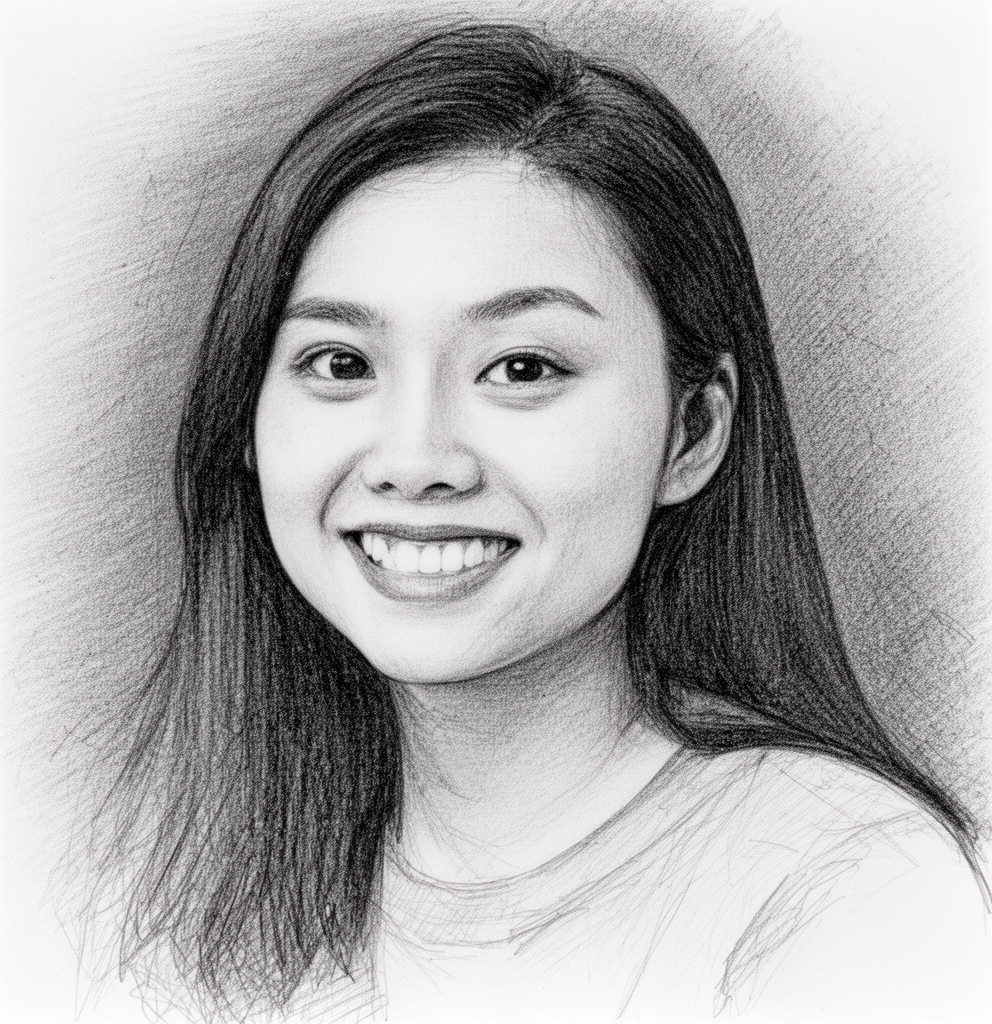
Who Is Coco Mao?
Coco Mao is the co-founder and CEO of OpenArt — a 10-person AI startup with 6-7 million monthly active users that grew from $0 to $10M ARR last year and doubled again in the first half of this year. By any conventional measure, she's running one of the most capital-efficient AI companies in the world. By her own measure, the leaderboard that celebrates that fact is a "vanity metric."
She spent seven years at Google, including time at Google Photos and at Google's incubator, where she co-founded a short-form video platform that Google Search later acquired. She left in 2020. By 2022, she was on her own again, building OpenArt with her co-founder. The first version was a "Pinterest for AI images" — a browsing experience, not a creation tool. It went to the top of Hacker News. From there she pivoted four times — image creation, video, consistent characters, and finally one-click visual storytelling. Today, OpenArt's users include teenage TikTok creators, Sunday school teachers in Nashville, and a 70-year-old grandma in New Zealand making cat-visiting-Greece videos.
What makes Coco distinctive isn't the trajectory. It's the way she narrates it. She rejects the "founder had a vision from day one" myth out loud, then articulates a vision she clearly didn't have on day one but does have now: she wants OpenArt to be a category-defining company, not category-stuck.
The Archetype: The Creator
The Creator
The Explorer
The Reward
Coco's whole mission is making creation accessible. She doesn't talk about owning a market. She talks about empowering people to make things they couldn't make before. The Sunday school ladies, the New Zealand grandma — in her telling these aren't customers, they're newly-minted creators. Her identity sits in the maker's role, but the deeper move is making others into makers.
The Creator archetype shows up in how she talks about her product. When she demoed the one-click story feature in our conversation, her energy spiked: "Oh, cute!" "I love it!" "This thing is weird." That delight isn't performance. The founders who stay in love with what they're building are the ones who keep iterating long past the point where most people would coast. Coco is in love with the wings, not the flight.
"Our mission is to really democratize visual storytelling. My thesis is that everyone really has great ideas, but if you want to really represent visually, I think it's still pretty exclusive. The best stories today are still told by Hollywood studios and by filmmakers. But I do think everyone, even a five-year-old kid, can have really great ideas if you give them the power to visually express their stories."
Her secondary archetype is The Explorer. She's pivoted four times — from image browsing to AI artists' Pinterest to image creation to video to visual storytelling. The gold rush analogy in our conversation revealed the explorer mindset: "If there's really any gold in the water, then it must be the people who were already in the river." The restlessness isn't reactive. It's structural. She'd rather be in the river not knowing where the gold is than safe on the shore knowing she missed it.
The Hero Match
Daedalus
Daedalus was the master craftsman of Greek mythology — a mortal inventor, not a god. He's not the hero who wins by being the strongest or the loudest. He wins by iterating. He built the labyrinth, then escaped it. He built wings out of wax and feathers because he was constrained — that's exactly the lean-AI move: working with available materials when you can't manufacture your own.
Coco's framing maps cleanly onto that constraint:
"We don't actually own any of the models because training model is very source intensive. And I also feel like models are becoming a commodity. For our team, we have more background building products. We didn't have background like training models, so we to some extent were forced not to train the model. But then in retrospect, it was the really right choice."
That's Daedalus on Crete. Given the constraint, he built wings. The deeper parallel is what Daedalus's wings did — they let people fly who couldn't before. Coco's one-click story tool, her consistent characters, her video agent — these are wings for non-creators. The 70-year-old grandma making cat-visiting-Greece videos isn't a power user. She's someone who got wings. "These creators would have never become creators without Gen AI," Coco said. That's the Daedalus gift, restated for 2026.
And like Daedalus, she's iterative because the situation demands it, not because iteration is her aesthetic. He kept building because Crete kept changing. So does she. Most founders treat iteration as a phase. She treats it as the medium.
Hiccup Haddock III — How to Train Your Dragon
Hiccup is the small Viking who can't out-muscle anyone, so he iterates. His first prosthetic for Toothless is bad. He fixes it. He fixes it again. He doesn't try to build the perfect dragon-tail in v1 — he ships, gets feedback (Toothless flying lopsided), and iterates. That's Coco's "launch something you're ashamed of" embodied. Hiccup also wins by working with what's there. He doesn't slay dragons; he befriends them. Coco doesn't train models; she builds on top of them. Same instinct.
There's also something Hiccup-y about how she carries herself. She's not grandstanding. The numbers are huge — 6-7 million MAU, 10 people, $20M+ ARR — and she talks about them like they're context, not credentials.
"If you really make a lot of money, who cares whether if it's lean or not, because the lean shouldn't be the goal. The revenue or how your company changes the world should be the goal, not the lean part. I think the lean is just a means to an end."
That's a Hiccup line. He cares about the tail working, not about being the lead Viking.
The Story Behind OpenArt
The Founder's Journey ↔ The Company's Journey
Carnegie Mellon → Google Photos → Google's incubator → first startup acquired by Google → left Google in 2020 → started OpenArt in 2022 → "anxious last year" about competition → decided not to stay in someone else's category → leading the lean AI leaderboard while calling it a vanity metric.
Pinterest for AI images on Hacker News → AI image creation tools → AI image generation and editing workflows → consistent characters → video models → one-click story → visual storytelling as a category → exploring AI-native consumption platforms.
Both arcs share the same shape: pragmatic experimentation that produces vision, not the other way around. Coco didn't have a grand plan when she left Google. She knew she wanted a startup, and she trusted that the right idea would surface through iteration. OpenArt didn't have a grand plan when it shipped that Pinterest site. It trusted that the right product would surface through user signal. The founder's instinct — "making decision fast is more important than making the right decision" — became the company's operating system.
How Coco Leads
Coco is a hybrid leader: consensus on tactics, sole decision-maker on conviction. When she narrates strategy decisions, she uses "we" — the team focused on images last year, we started doubling down on video. But on conviction — what category to play in, why lean isn't the goal, why models are a commodity — she shifts to "I." It's clean leadership architecture. Her team gets credit; her principles stay hers.
She also owns mistakes without softening them. When she described switching the company's payroll system from one provider to another and regretting it because of subsequent tax issues and migration headaches, she said simply: "I regret it so much." Most founders would frame past mistakes as learning experiences, with the right amount of plausible deniability. She doesn't. The clarity makes her trustworthy.
Her decision-making philosophy is explicit: "Making decision fast is more important than making the right decision. Because if you stay too long just making the decision, then you don't have new information... but if you start going some direction, you made the wrong decision, then you course correct." Speed beats accuracy because waiting at a fork doesn't generate new information. That conviction gives her permission to move while others freeze.
Founder Superpowers
Iterating Without Ego Protection
Coco's signature operating heuristic is "launch something that you are ashamed of." She generalizes it with a vivid analogy: imagine a girl all dressed up, getting attention. She can't tell whether people like her or her dress. Now imagine her dressed down — anyone who still wants to talk to her actually wants to talk to her, not the dress. Most founders launch when they're polished. Coco launches when she's embarrassed. The "ashamed" word is doing real work — it's a structural commitment to skipping the months most founders waste protecting their ego at launch.
Translating User Noise Into Problem Statements
OpenArt's Discord has 350,000 users. Coco did 30 user interviews in a single week. But the discipline isn't the volume — it's the filter. "You listen to the users, but you don't listen to their feature requests. You listen to their problems." She gave the perfect example: users kept asking for "consistent characters." Most teams would have built that as a feature and shipped it. Coco asked why anyone needs a consistent character, and the real problem turned out to be "they were trying to tell a story." That insight became the visual storytelling pivot. The superpower is the translation layer between what users say and what they actually need.
Refusing to Stay in Someone Else's Category
"AI image generation is the category defined by Mid Journey already. I don't wanna stay in a category defined by another company. I wanna be a category-defining star." This is the most "I" moment in our conversation — the place where consensus stops and conviction starts. Most founders accept the category they were born into and try to optimize within it. Coco rejected hers while it was still working. She watched competitors with great teams die because they stayed in the defined category. Her insight: in fast-moving markets, the right level of pivot is the category, not the feature.
What It's Like to Work with Coco
Coco's conversational style is measured and warm. She doesn't dominate — she lets the other person drive, takes time before answering, and doesn't fill silence with filler. When she hits something she hasn't pre-resolved, she says "yeah, okay, let's see" and pauses. That carefulness extends to how she talks about the company: when something is unresolved, she'll tell you. When asked what she'd do with a hypothetical $10M marketing budget, she said "we have a lot of great plans, but probably not. I think we should execute it and then we can share." She'd rather say less than overclaim.
But the warmth is real. She's still doing 30 user interviews a week. She's still on Discord answering messages. Some users are on her personal WhatsApp. "I really love talking to our users." That's not a performative line — it's how she spends her time. Her stated daily breakdown: think long-term about OpenArt's vision, run the team efficiently, and talk to users. The third item is the one she lights up about.
What this creates is a particular kind of work environment: methodical, capital-disciplined, and ICP-focused, but anchored in genuine user empathy. The team ships fast (one-to-two-month cycles for major features), tests with users, and course-corrects. The bar is high but the rules are explicit: don't optimize too early, don't listen to feature requests, listen to problems, and ship before you're ready.
"I wouldn't say it's the most hardcore... I've seen founders that work every day and the moment they wake up and the moment they sleep. I feel I'm not as hardcore as that. I try to have at least one day for free."
The tradeoff: working at OpenArt means working in a small team where every person has to translate user noise into product clarity, where the lean approach isn't a constraint but a choice, and where the founder's primary energy goes to the user — not to performing hustle on social media.
Why This Matters (For You)
If You're Building a Generative AI Product
The hardest part of building in generative AI right now isn't the models — it's deciding which problems are worth solving and which are vanity. Coco's ICP discipline is the answer most teams haven't internalized: "You need to be clear about your ICP so that you pick the problems of your ICP and then work on it instead of listen to everyone's problems." OpenArt's 350K Discord users are loud. She doesn't surf the noise. She picks the use cases that actually compound (gen-AI social media creators, SMBs) and ignores the rest. If you're building in image, video, or any AI creation category, the question isn't "what features should we ship?" — it's "whose problems are we solving, and what would they say if we asked why?"
If You're an Engineer or Builder Choosing What to Build
Coco's most reusable insight for builders is structural: "We don't actually own any of the models... we to some extent were forced not to train the model. But then in retrospect, it was the really right choice." Models are commoditizing. The defensibility isn't in training your own — it's in the application layer above them. The architecture choice for OpenArt's video agent — "Films aren't shot from start to end. They shoot clips and then put everything together" — is a clear technical thesis. They don't generate end-to-end. They generate scenes, let users regenerate any single clip, and assemble. That decision came from observing how humans actually make films. What would you stop trying to build if you trusted that the model was a commodity? What would you build instead?
If You're Early in Your Career
Coco's path teaches a specific lesson: vision is not a prerequisite. "From the day I entered Google, I was very determined to do a startup," she said — but she also said most founders don't know what they're building from day one, and she included herself in that group. She used Google as a place to learn while she figured out what kind of startup she wanted to build. She joined Google's incubator. When that startup got acquired, she took the experience and left. Her career strategy was iteration at the meta-level: get into the right rooms, ship things, see what happens, course-correct. The implication isn't that you should leave your day job tomorrow. It's that the difference between people who eventually start companies and people who don't isn't vision — it's a willingness to keep iterating on what they want and what they're capable of, in public, even when they don't have the answer yet.
If You're Considering Joining OpenArt
OpenArt is a small team — 10 people running a product with 6-7 million MAU and $20M+ ARR. That math means every hire matters and every person operates closer to the user than they would at a 200-person AI startup. Coco's leadership style is methodical and capital-disciplined, but anchored in user obsession (she's still on Discord and personal WhatsApp with users). The bar for shipping is "are we embarrassed enough that we'll learn something?" not "is this perfect?" If you want to optimize for prestige, this isn't the right place — Coco openly rejects the leaderboard recognition the company gets. If you want to build something with structural conviction in a fast-pivoting space, where the founder will tell you what she's certain about and what she isn't, OpenArt is one of a handful of places running this playbook.
Go Deeper
Watch the full conversation: Coco Mao on Heroes Behind AI
Join OpenArt
Now that you know how Coco Mao leads, see if there's a role for you.