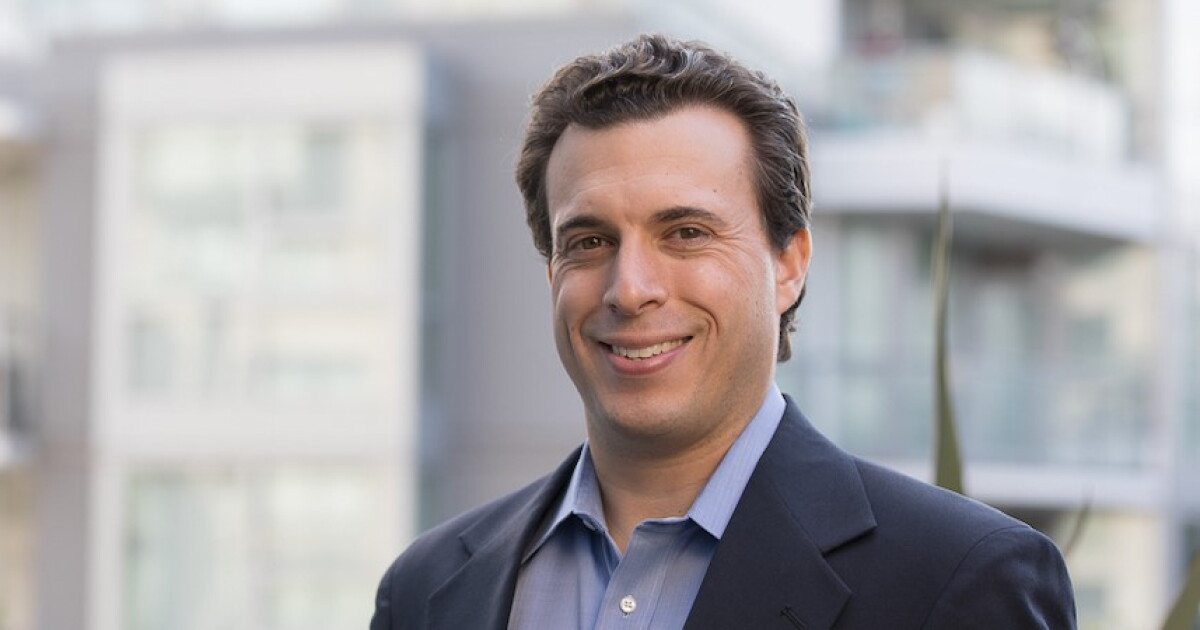
Who Is Avi Tuschman?
Avi Tuschman introduces himself in one line: "I'm a very, very curious person." The thread through a career he calls "apparently nonlinear" is risk management. He started in private-sector intelligence, moved into political risk and the psychology of individual differences, wrote about it, advised corporations and heads of state, and has spent more than a decade in the Stanford StartX community building companies that use AI to model risk.
His first company models actuarial loss for property and casualty insurers. His newer one, Crickit, does something you can watch happen: it checks the factual claims in a YouTube or TikTok video while the video is playing, and shows its sources.
Crickit is also scaling this technology into its Enterprise Information Risk System (EIRS), which tracks and verifies emerging claims across social video and podcasts and measures how narratives spread. The team is developing market intelligence for investors and narrative intelligence for enterprises, exploring links to market movements and business risks.
The name is spelled C-R-I-C-K-I-T, and it is a tribute to the talking cricket in The Adventures of Pinocchio. Avi picked a character from a fable on purpose. The book, he says, gets at a conflict people have everywhere: "wanting to believe things that are too good to be true," against the hard work of learning that things are complex and how not to be manipulated.
The Archetype: The Sage
The Sage
The Explorer
Tests & Allies
Avi leads with the archetype of The Sage. He wants to know what is true, and he wants to show the work. His message to students is blunt: "you can't get things right by ideology or popularity. You need to be evidence-based." He describes science as a rare kind of information system, one with "no permanent authority," where any claim can be updated or overturned.
He also applies the standard to himself. Asked how bad foreign disinformation is, he opened with "I'm not an expert in this area." Halfway through a point about social life he stopped to say he was exaggerating and that his own product would call him on it. Crickit is built the same way: it reports how many sources it read, links the evidence, and says so when there is not enough evidence to judge a claim.
His secondary archetype is The Explorer. He ranges across evolutionary anthropology, insurance math, narrative theory and parenting inside a single conversation, and he describes his favorite sport, surfing, as something you can train at for decades without finishing.
"We should all make evidence based decisions because we're all leaders over our own life and we all have to pay for the facts."
The Hero Match
Socrates
In Plato's Apology, Socrates compares himself to a gadfly: a small stinging insect that keeps a large, sleepy horse awake. His method was to test every confident claim, no matter who made it. What he reported was that people skilled in one craft kept assuming they were wise about everything else.
Avi built a small insect that does the same job, and he points it at himself first. If this conversation goes on YouTube, he said, "it could bite me, it could bite you," and added, "it should absolutely bite me." He describes Crickit as "kind of an annoying lawyer that's done all the research and looked at the facts."
He also shares the Socratic finding. He trusts experts on their own subject and says so, but he also observes that famous people "go out of their lane all the time." Even a Nobel laureate, he notes, can oversimplify. The answer is not to distrust everyone. It is to keep asking what the evidence says.
Spock: Star Trek: The Original Series
Think of Spock at the science station on the bridge: the one who reads the instruments, gives the odds, says so when there is not enough data, and meets every surprise with "Fascinating." Avi's version of that word is "very, very interesting." When the conversation turned to AI risk, he reached for an equation and worked through what it implies when the possible loss is very large.
Spock is also half human, and so is the best story Avi tells. He was persuaded by an argument about mothers and children, and then impressed when the evidence overruled it.
"And immediately I thought, my God, this is correct."
The Story Behind Crickit
Avi was listening to Geoffrey Hinton, a researcher he admires and follows closely. As Avi recalls it, Hinton was arguing that our best chance with advanced AI is to build one that regards us the way a mother regards her children, because a mother will do anything for her kids. "I was kind of convinced," he says.
Then Crickit, running on the video, flagged the claim as not fully right. The reason it gave was parent-offspring conflict: the body of evolutionary research, associated with Robert Trivers, showing that even the closest family members have competing interests. Avi is an evolutionary anthropologist. This was his own field, and his own tool had reached it before he did. "It just shocked me how well that worked," he says.
A second story shows what he will not trade away. Researchers at an Ivy League business school wanted to study Crickit. Their design was to give people the tool, measure how well it worked, then take it away and measure what was lost. Avi understood the concern behind it; he worries about over-reliance on AI in education too. But he and his team said no. "This is an intelligence tool," he told them. Some skills you learn once. Making sense of facts in a fast-moving world, he argues, is closer to surfing: you "don't just learn it and stop training."
That is where Crickit is today: in the middle of the story, being tested against the world. The product works across YouTube and TikTok in more than 50 languages. Schools in a European country known for media literacy are using it. And its founder is finding out, one decision at a time, who is ready to walk with it.
The Founder's Journey ↔ The Company's Journey
Private-sector intelligence, where he saw how evidence gets made and used. Political risk, psychology and writing. Advising corporations and heads of state. More than a decade building AI risk companies in the Stanford StartX community. A first company that models actuarial loss for insurers. Now a second one, aimed at the facts themselves.
An idea for a real-time verification tool built on open source intelligence methods, in bite-size form, for learners, young people and journalists. A browser extension that overlays fact-checks on video like subtitles. By his account, a 98.7 percent score on an EU fact-checking benchmark, followed by the discovery that the benchmark itself had errors. Verdicts designed to expire, because facts change. Schools in one European country on board, and more platforms being added.
The same archetype drives both. A Sage who spent his career asking how people decide under uncertainty built a tool that tells you how certain you are allowed to be.
How Avi Leads
Avi describes the best moments of his working life as the ones "when you're maximizing like group intelligence or when you have like an idea meritocracy." He says he does not much care how the team gets there as long as it finds the best idea, and he credits years of working with brilliant people, and having to listen to them, for his own growth: "I think it's helped me develop as a person."
He reads people before he pushes change. When AI coding tools arrived, he asked his engineering team whether they were using them, and he expected resistance at first, because the work is tied to training and identity. He watched data science adopt first, then some engineers, then everyone.
He also holds a line when the principle is clear. Turning down a research collaboration with a well-known school is not an easy call for a young product. He made it because the study treated the tool as something to remove, and he sees it as something people should be able to keep.
Founder Superpowers
Putting risk math on fuzzy questions
Avi takes debates that usually run on mood and gives them a shape you can calculate. On AI safety: "the right way to think about risk is frequency times severity," and "you have to be conservative when you think about significant loss." On media, he borrows "errors and omissions" from insurance to describe what misleads careful viewers.
Inviting the correction
He built the check and then stood under it. "Crickit's gonna bite me on that," he said, right after exaggerating about dinner parties. He tells the story of his tool correcting an argument he liked, and he criticized the benchmark he says he scored 98.7 percent on.
Borrowing across distant fields
He solves a problem in one field with a tool from another: ant genetics for how AI systems might cooperate, narrative theory for what short video teaches young viewers, surfing for why checking facts is a skill you never finish, and Jeff Bezos's question about what will always be true for why factuality is worth building on.
What It's Like to Work with Avi
In conversation, Avi is considerate and unhurried. He lets you finish, builds long and complete answers, and tells you how confident he is as he goes. He will say "I'm not an expert in this area" without discomfort, and he will also tell you, plainly, when he thinks an idea is "totally ahistorical."
He asks for your view and means it. Midway through a point about AI and meritocracy he stopped and said, "I'd love to hear your point of view on this one." He credits other people often: authors, researchers, the teams he has worked with. Expect to bring evidence, expect to be listened to, and expect a colleague who is competitive about being accurate.
He sees building a company as a craft and a sport. Founders, he says, are great artists and great athletes, and the work is a team sport. He talks about his own sport the same way.
"I'm a surfer. That's a very, very hard sport. I love it."
Why This Matters (For You)
If You're a Parent, Educator or Journalist Worried About What Video Teaches
Crickit was first imagined for learners, young people and journalists, and Avi's advice to them is practical. Fake news is real, he says, but careful viewers should worry more about errors and omissions: the detail left out, the number slightly off. Those add up, even in high-quality programs. He also separates two things that often get merged. Knowing whether a clip is a deepfake "just doesn't tell you like what's true or not," because "there's plenty of real content that is dangerous that is not manipulated." At home, his young children watch DVDs, not streams. What would change if you checked the claim and not the production value?
If You're an Engineer Building Search-Grounded AI
Avi's design rule is short: "you have to use AI to do the work," but the model cannot be the source of truth. "It has to be appropriately grounded." In Crickit that means reading about 30 sources per claim on average, filtering out roughly eleven thousand domains that third parties rate as unreliable, scanning for contradictions, and refusing to rule when evidence is thin. It also means treating time as part of the data. Verdicts expire, or carry the point in time when they were made. He thinks retrieval quality and the search index are the underrated layer of the stack. How much of your system's accuracy depends on a search step nobody is benchmarking?
If You're Early in Your Career
Avi's path ran through intelligence work, political risk, psychology, writing and two AI companies, and he ties it together with one interest: how people make decisions in an uncertain world. The lesson is that a through-line can be a question and not a job title. His one piece of advice for founders is to read biographies, because seeing what great builders went through shows you "the mountain you're climbing" and which hard parts are normal. And his advice to students applies to careers too: popularity is not evidence.
If You're Considering Joining Crickit
Expect a founder who wants the best idea to win and who has said that learning to listen to brilliant collaborators made him better. Expect open questions about how you work, including how you use AI tools, and patience with the answer. Expect the product's standard to apply inside the company: say what you know, show your sources, admit what you have not read. The "How Avi Leads" section above is the closest thing to a preview of working with him.
Go Deeper
The full conversation with Avi Tuschman is on its way. Check out other episodes in the meantime.